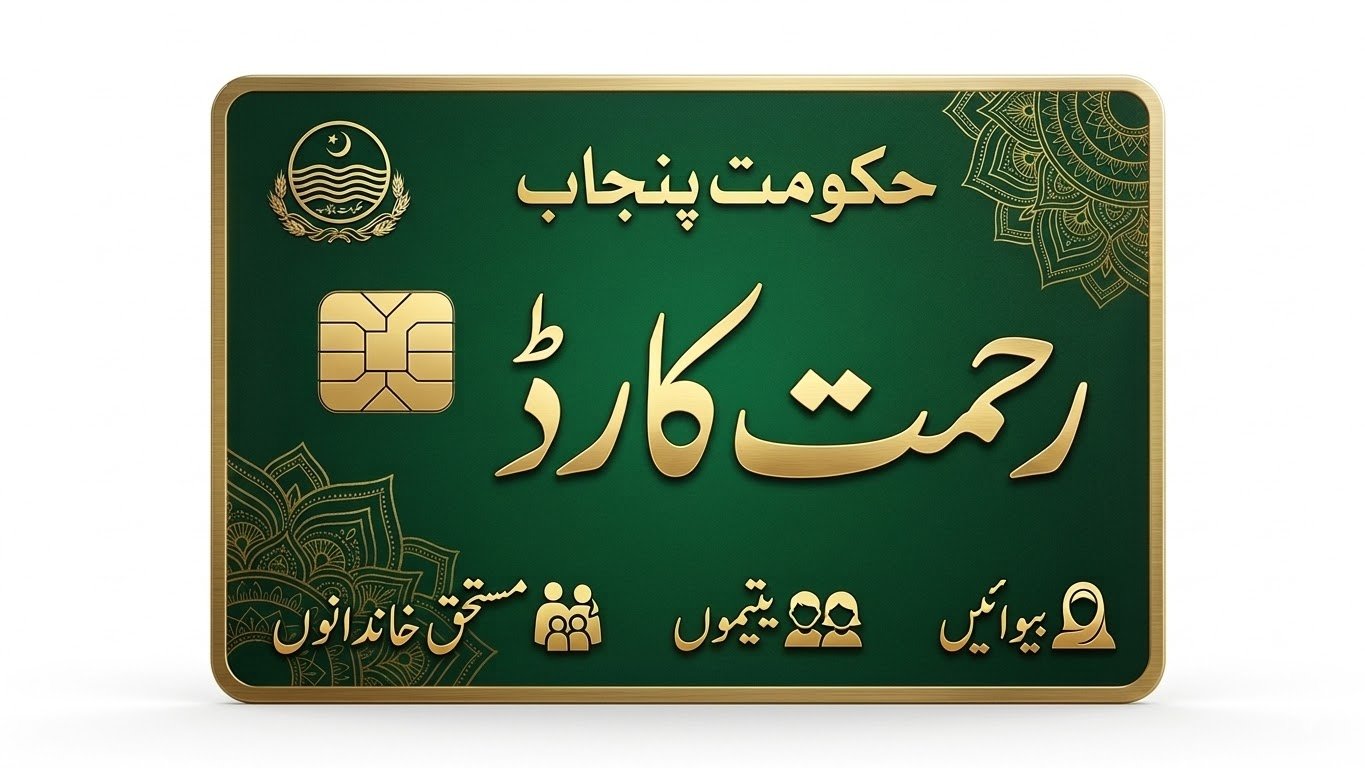
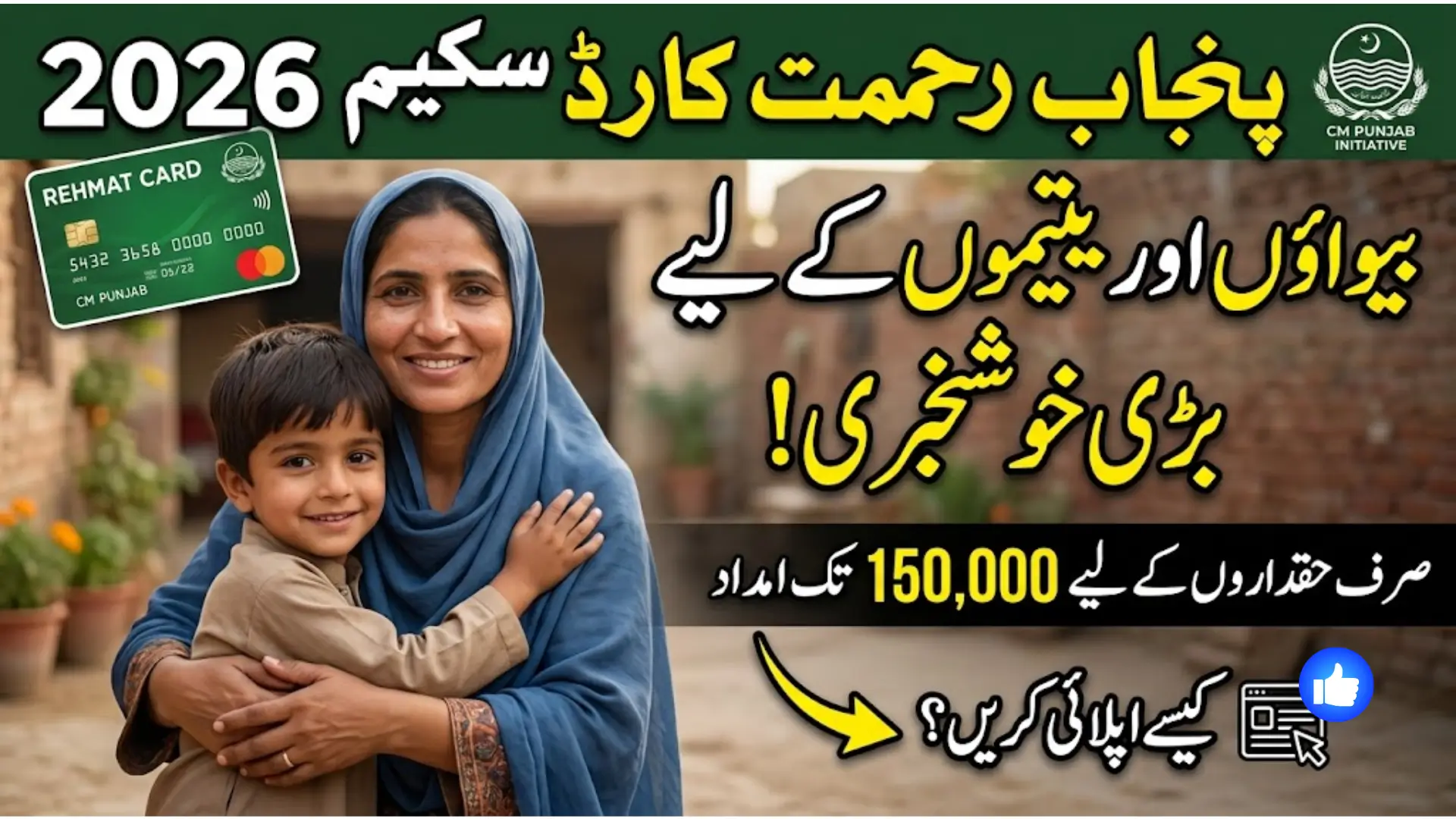
Punjab Rahmat Card Scheme 2026. The Rehmat Card program announced by Punjab Chief Minister Maryam Nawaz Sharif is one of the important social welfare initiatives of the Punjab government. This program aims to provide financial assistance to families and individuals who are going through difficult circumstances. Under this, an attempt has been made to provide financial assistance directly to the deserving people so that they can meet their essential expenses.
If you want to get complete information about the Rehmat Card, then this guide will be helpful for you. Here we will explain in simple words how much financial assistance can be obtained under the Rehmat Card, who is eligible for it, what are the necessary documents, and how to apply online.
What Is the Punjab Rahmat Card Scheme 2026?
The Punjab Rehmat Card Scheme is a financial aid scheme that has been developed by the Punjab Zakat and Ushr Department. For the financial aid scheme, there is a budget of Rs. 5 billion, and it will provide financial assistance to about 50,000 deserving people. The scheme will give special consideration to widows and orphans.
One unique thing about the Rehmat card is that the financial assistance will be provided through a unique digital system. There will be no need for the deserving people to make visits to government offices or wait in long lines to receive financial assistance. The money can easily be transferred to the digital wallet through their CNIC.
How Much Financial Assistance Will You Receive?
Here’s the breakdown of what eligible families can expect under the scheme:
| Category | Amount |
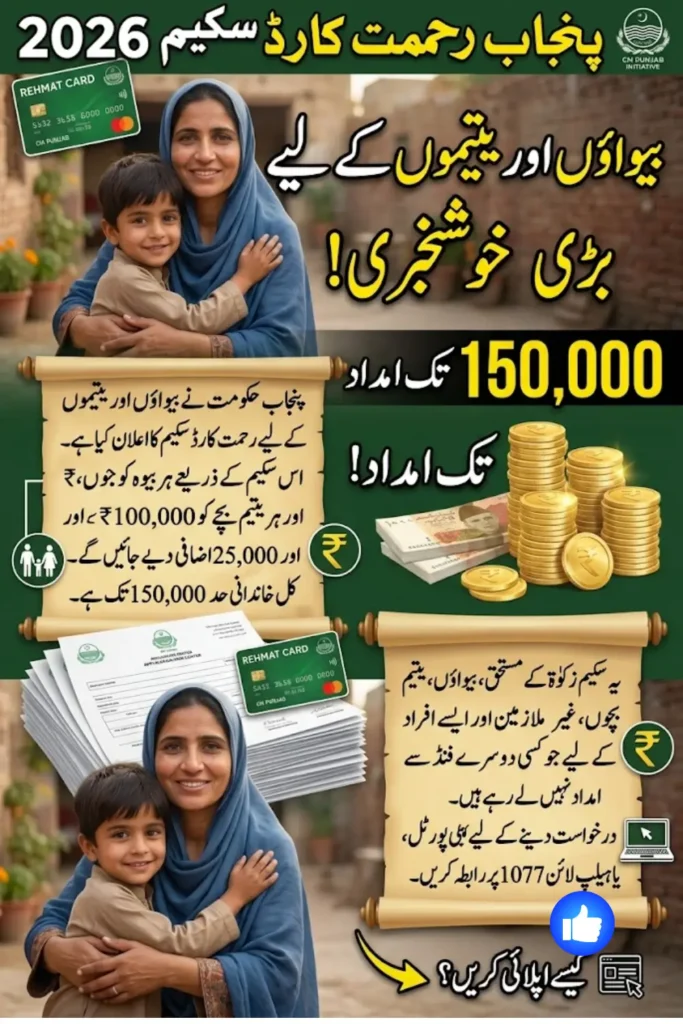
| Per eligible widow | Rs 100,000 |
| Per orphan child (additional) | Rs 25,000 |
| Maximum cap per family | Rs 150,000 |
Thus, for a widow who has two or more children, she would be able to get the entire cap of Rs 150,000 through a combination of both her basic amount along with that of children. The funds are deposited electronically, hence saving the hassle of visiting a bank.
Who Is Eligible for the Rahmat Card?
Not every widow or orphan will automatically qualify. The scheme follows Zakat eligibility rules under Islamic Shariah, so applicants need to meet the following criteria:
- Zakat eligibility: You must qualify as a Zakat-deserving individual under Shariah guidelines.
- Widow or orphan status: Applicants must be a genuinely needy widow, or a child who has lost one or both parents.
- No government employment or pension: Government employees, pensioners, and anyone classified as Sahib-e-Nisab (financially well-off, above the Nisab threshold) are excluded.
- No overlapping benefits: You should not already be receiving regular financial support from another public welfare program (this is meant to prevent duplicate benefit claims and ensure funds reach as many different families as possible).
However, in case you are not sure if you qualify for this program, the best way out would be to visit the website or call the toll-free helpline below, because eligibility is determined on the basis of records kept by the government itself.
How to Apply for the Punjab Rahmat Card Scheme
The government has kept the application process fairly simple, with three main options depending on what’s most convenient for you:
1. Apply Through the Official Web Portal
Head to the official CM Punjab Rahmat Card portal and complete the online registration form. You’ll typically need your CNIC number and basic family details on hand before you start.
2. Apply Through the Mobile App
The Zakat & Ushr Department has released a dedicated mobile application, allowing you to register and track your application status directly from your phone — useful if you don’t have easy access to a computer.
3. Apply Through the Helpline
In case you find trouble while filling the form or any queries before submission of the application form, you can contact the official Rehmat Card helpline number on 1077. The representative will help you in filling up the application form as well as give answers to your eligibility queries.
Why This Scheme Matters
Programs like this one aren’t just about the money they’re about dignity. A digital wallet system means beneficiaries don’t have to explain their situation to a room full of strangers or make repeated trips to a government office just to collect what they’re owed. For a widow raising children alone, that difference in convenience can matter almost as much as the funds themselves.
That said, no welfare program is perfect on day one. As the Rahmat Card Scheme rolls out to its target of 50,000 families, it will be worth watching whether the digital wallet system reaches applicants in rural areas as smoothly as it does in cities access to smartphones and stable internet isn’t universal across Punjab, and that’s often where earlier programs have run into friction.