Balochistan Approves Double Shift in Schools
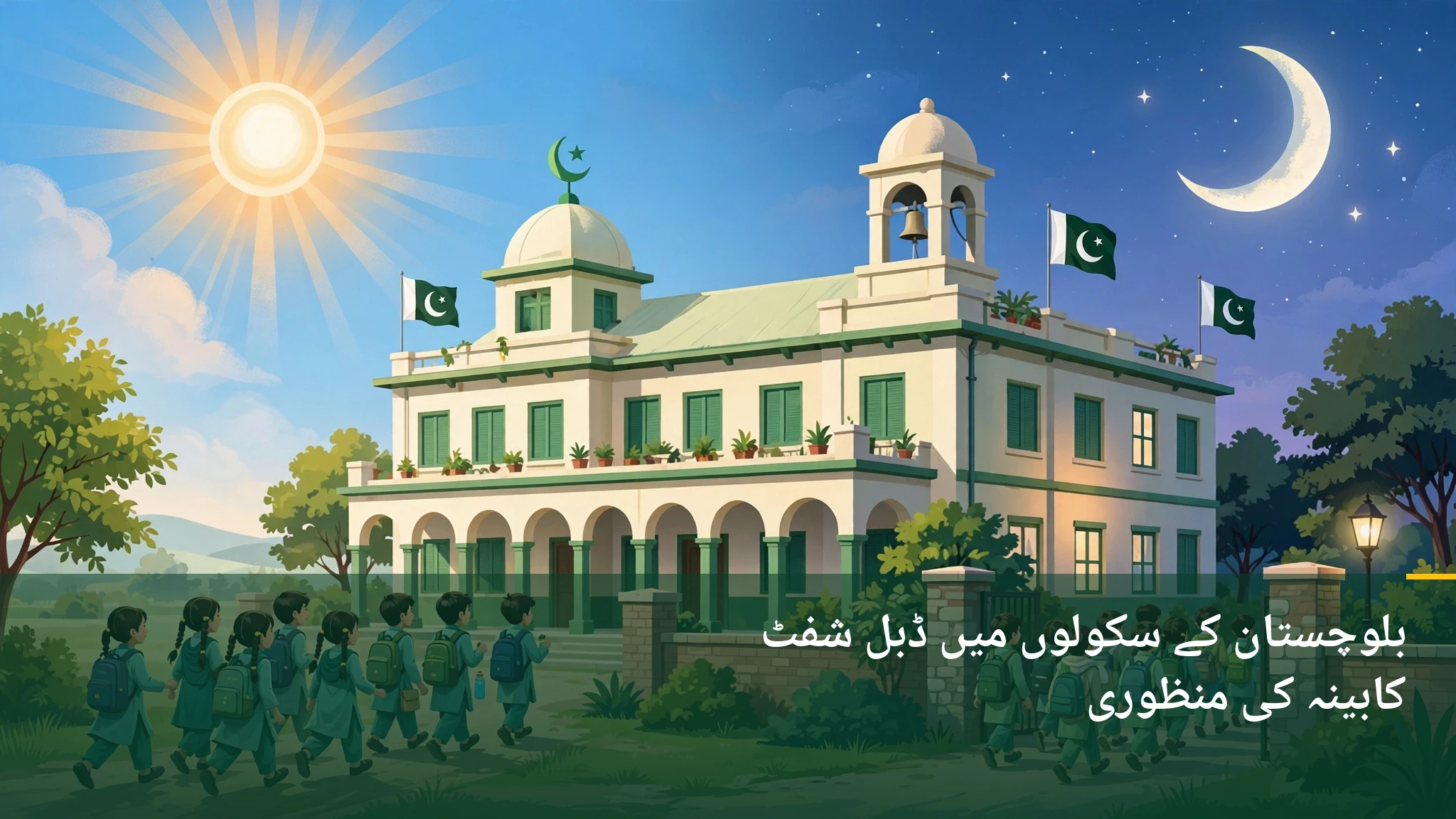
Balochistan approves double shift in schools. The Balochistan cabinet, chaired by Chief Minister Mir Sarfraz Bugti, has approved double-shift teaching in government schools to accommodate more students using existing infrastructure. This complete guide covers the double-shift decision, the Non-Formal Education Act for 1.6 million out-of-school children, and the other reforms approved in the same cabinet meeting.
Latest Update (October 2026)
The decisions were taken at the Balochistan cabinet meeting on 9 October 2026, chaired by Chief Minister Mir Sarfraz Bugti in Quetta. Briefing the media, Adviser to the Chief Minister on Information and Political Affairs Shahid Rind said the decisions reflected the government’s commitment to public welfare and practical reforms. Source: ProPakistani, 13 October 2026
Double Shift Decision – Key Details
| Detail | Information |
|---|---|
| Decision | Double-shift teaching in government schools |
| Approved By | Balochistan cabinet (chaired by CM Mir Sarfraz Bugti) |
| Date | 9 October 2026 |
| Format | Evening classes using existing school buildings |
| Goal | Accommodate more students without new infrastructure |
How the Double Shift Works
- Two shifts, one building: morning classes run as usual, with a second evening shift added in the same schools.
- More seats, no new buildings: existing infrastructure absorbs more students.
- Better resource use: classrooms, furniture and facilities serve twice the students.
Non-Formal Education Act for 1.6 Million Children
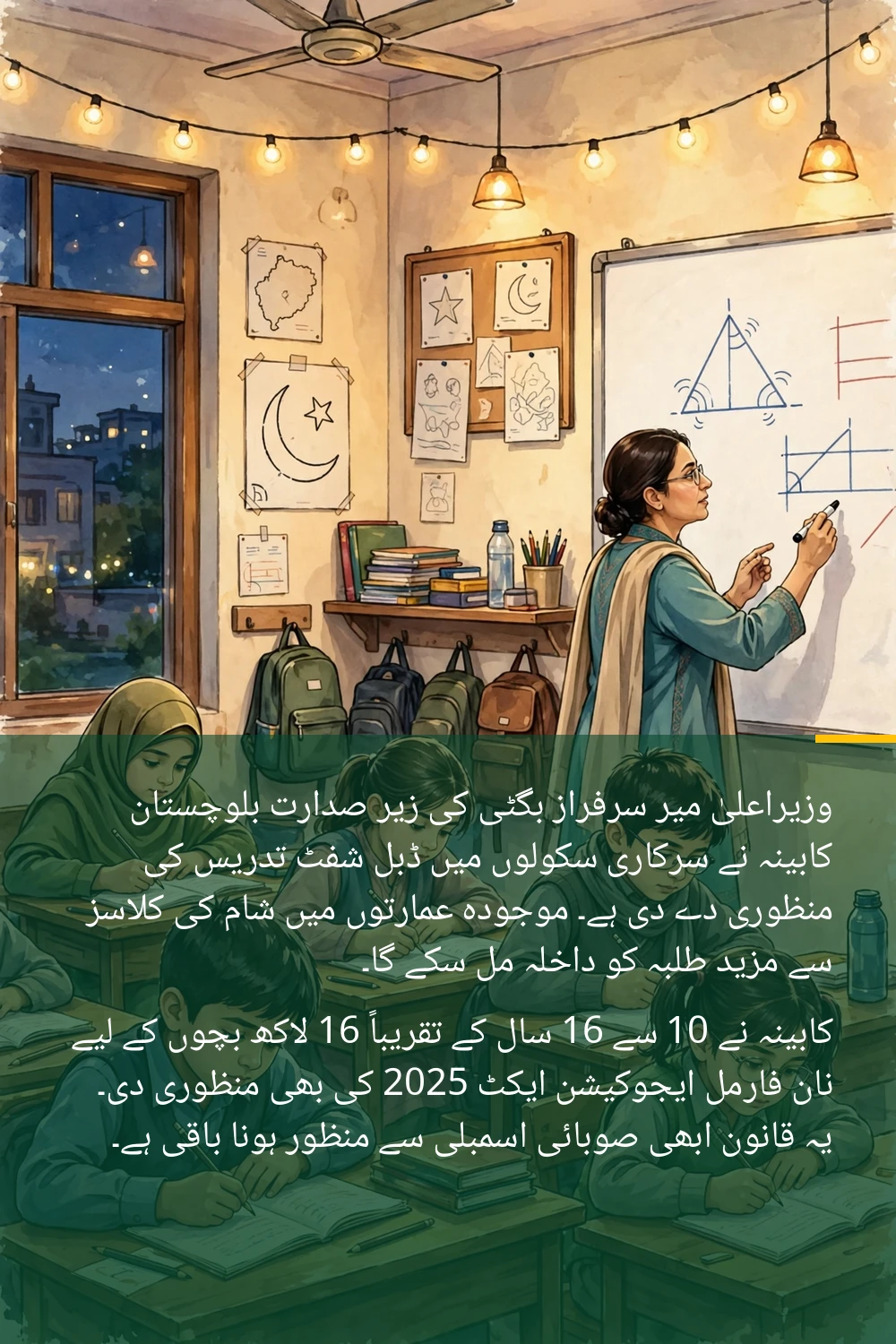
The same cabinet meeting approved the Balochistan Non-Formal Education Act, 2025, targeting about 1.6 million children aged 10 to 16 who are outside the formal education system. Non-formal education means shorter, condensed courses run outside the normal school timetable, so children who missed years of schooling can catch up and rejoin regular classes or move to skills training.
Important Note on the Act’s Status
A cabinet approval is not yet law. The Non-Formal Education Act still needs to be passed by the Balochistan Assembly and notified before any centre can enrol a child under it. No enrolment date has been announced.
Other Reforms Approved in the Same Meeting
- Mineral Development Fund Policy: to channel natural-resource revenue into public welfare and provincial development.
- Tourism and cultural policies: draft policies to promote investment, employment and heritage protection.
- Industrial revival: incentives to reopen closed industrial units.
- Procurement rules: electronic bidding made mandatory for tenders exceeding Rs 500,000.
- Health reforms: Telemedicine and Remote Health Services Act 2026, Public Health Act 2026.
- Education Foundation: reconstitution of the Balochistan Education Foundation’s board.
Common Mistakes to Avoid
- Treating the Act as law: it needs assembly passage and notification first – wait for the official enrolment announcement.
- Missing the shift timings: parents should confirm their school’s new evening-shift schedule with the administration.
- Ignoring non-formal options: families with out-of-school children aged 10–16 should watch for the programme’s launch notice.
Frequently Asked Questions
Q: What did Balochistan approve for schools?
Double-shift teaching in government schools, plus the Balochistan Non-Formal Education Act, 2025.
Q: When was the decision taken?
At the Balochistan cabinet meeting on 9 October 2026, chaired by Chief Minister Mir Sarfraz Bugti.
Q: How does double-shift schooling work?
Evening classes are added in existing government school buildings, accommodating more students without new construction.
Q: Who does the Non-Formal Education Act target?
About 1.6 million out-of-school children aged 10 to 16, through condensed courses outside the normal timetable.
Q: Is the Non-Formal Education Act in force yet?
No – it still needs to be passed by the Balochistan Assembly and notified; no enrolment date has been set.
Q: Who briefed the media on the decisions?
Adviser Shahid Rind, Adviser to the Chief Minister on Information and Political Affairs.
Q: What other reforms were approved?
Mineral fund policy, tourism and cultural policies, industrial revival incentives, mandatory e-bidding for large tenders, and health laws.
Final Thoughts
Balochistan’s double-shift decision squeezes more classrooms out of the buildings the province already has, while the Non-Formal Education Act aims at the 1.6 million children the formal system has missed. Together they are a practical answer to enrolment pressure – and parents should watch for the assembly’s next move on the Act.