
PM Laptop Scheme Female Participation 2026
PM Laptop Scheme Female Participation 2026. Pakistan has achieved an encouraging milestone in higher education and digital inclusion, as female participation in the Prime Minister’s Laptop Scheme reached 54% by April 2026. The latest figures were revealed in the Pakistan Economic Survey 2025-26, released on 11 June 2026, highlighting the growing role of women in higher education and technology-based learning across the country.
The achievement reflects positive progress in expanding educational opportunities for female students and improving access to digital resources. At a time when Pakistan continues to face educational challenges and a significant gender gap in literacy, the strong participation of women in the laptop scheme offers hope for a more inclusive future.
Key Highlights of PM Laptop Scheme Female Participation 2026
According to the Pakistan Economic Survey 2025-26, female students accounted for 54% of the beneficiaries under the Prime Minister’s Laptop Scheme. This means that more than half of the students receiving laptops through the initiative were women.
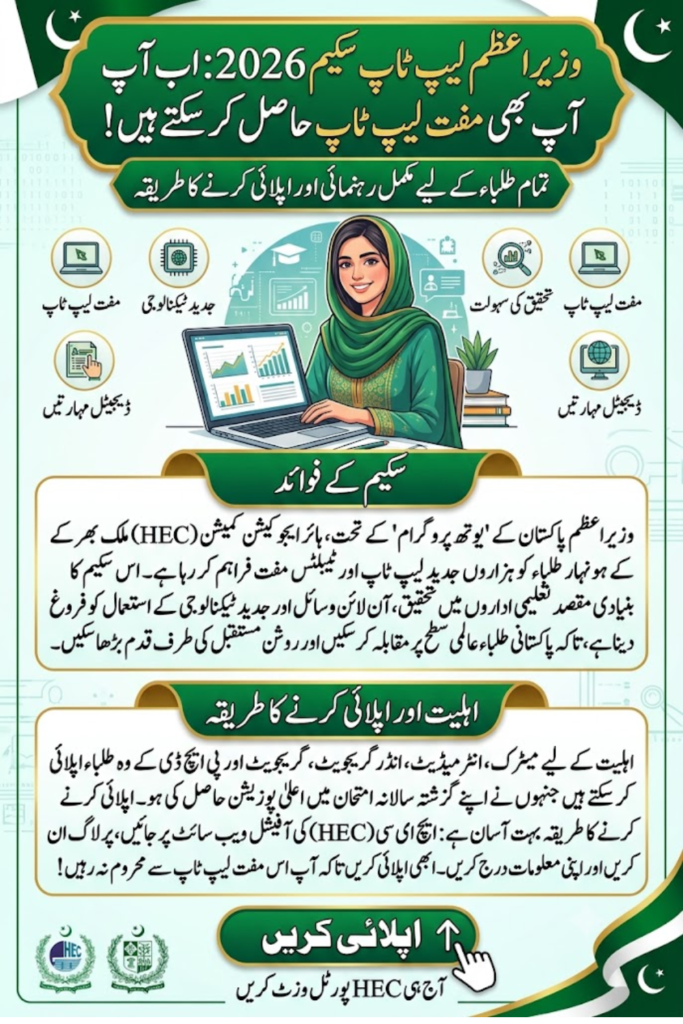
The program aims to provide students with access to modern technology, helping them improve their learning experience, research capabilities, and digital skills. The latest participation figures demonstrate that female students are actively taking advantage of opportunities in higher education and digital learning.
This development is particularly important because women have historically faced barriers in accessing quality education and technological resources in many parts of the country.
Laptop Distribution Across Pakistan
The survey revealed that 74,427 laptops had been distributed to students enrolled in higher education institutions. These devices benefited a total of 407,713 students studying in 156 universities and higher education institutions nationwide.
The laptop scheme covered students from all major regions of Pakistan, including Punjab, Sindh, Khyber Pakhtunkhwa, Balochistan, Islamabad Capital Territory, Azad Jammu and Kashmir, and Gilgit-Baltistan.
By extending support to students across different provinces and territories, the initiative has played a significant role in promoting equal access to educational technology throughout the country.
What the 54% Female Participation Rate Means
The fact that female participation has reached 54% is a strong indicator of increasing female enrollment and engagement in higher education. It suggests that more women are pursuing university-level studies and utilizing digital tools to enhance their academic performance.
Access to laptops enables students to conduct research, attend online classes, complete assignments, and develop valuable digital skills. For female students, especially those in remote or underserved areas, technology can help overcome traditional barriers to education.
The higher participation rate also demonstrates that targeted educational programs can successfully encourage women to become active participants in the digital economy and knowledge-based society.
Pakistan’s Literacy Gap and the Importance of Digital Inclusion
Despite recent progress, Pakistan continues to face a significant literacy gap between men and women. According to the Economic Survey, the male literacy rate stands at 73%, while female literacy remains at 54%.
This difference highlights the need for continued investment in educational initiatives that support girls and women. Digital inclusion programs such as the Prime Minister’s Laptop Scheme can help bridge some of these gaps by providing access to educational resources and online learning opportunities.
Technology has become an essential part of modern education. Students with access to digital devices can benefit from online courses, educational platforms, virtual libraries, and research materials that may otherwise be difficult to obtain.
As a result, programs that improve access to technology can contribute to reducing educational inequalities and improving learning outcomes.
Impact of the PM Laptop Scheme on Higher Education
The laptop scheme has had a positive impact on higher education by helping students access modern learning tools. With personal laptops, students can participate more effectively in academic activities and stay connected with educational resources.
The initiative supports research, project work, skill development, and communication between students and educational institutions. It also helps prepare graduates for a job market that increasingly values digital literacy and technological competence.
For many students, receiving a laptop can significantly improve their ability to learn independently and acquire practical skills needed for future careers.
Budget 2026-27 and the Future of Digital Education Programs
The Pakistan Economic Survey 2025-26 was released just one day before the federal Budget 2026-27. As policymakers discuss priorities for the upcoming fiscal year, digital education programs are likely to receive considerable attention.
The success of the laptop scheme may encourage further investments in technology-driven educational initiatives. Expanding digital infrastructure, increasing access to educational devices, and strengthening online learning systems could become important components of future education policies.
Many education experts believe that continued support for digital learning can help improve educational standards and enhance student outcomes across Pakistan.
Challenges That Still Need Attention
While the laptop scheme has achieved encouraging results, several challenges remain. Providing laptops alone cannot solve all educational issues facing the country.
Reliable internet access remains limited in many rural and remote areas. Without affordable and stable internet connectivity, students may not fully benefit from digital learning opportunities.
Pakistan also needs stronger universities, better educational infrastructure, improved teacher training, and expanded digital skills programs. Additionally, efforts to improve school-level education for girls are essential to ensure more female students can eventually reach higher education.
Addressing these challenges will require coordinated efforts from government institutions, educational authorities, and development partners.
Positive Signs for Women’s Educational Advancement
The 54% female participation rate in the Prime Minister’s Laptop Scheme is a positive sign for the future of women’s education in Pakistan. It demonstrates that more women are entering higher education and embracing digital learning opportunities.
Greater access to technology can empower female students, enhance their academic performance, and improve their career prospects. It can also contribute to broader social and economic development by enabling more women to participate in the workforce and the digital economy.
As educational opportunities continue to expand, female students are likely to play an increasingly important role in shaping Pakistan’s future.
Conclusion
The PM Laptop Scheme Female Participation 2026 milestone represents significant progress in promoting digital inclusion and higher education access for women in Pakistan. With female students accounting for 54% of beneficiaries, the initiative highlights a positive shift toward greater educational participation and technological empowerment.
Although challenges such as internet access, literacy gaps, and educational infrastructure still need attention, the success of the laptop scheme demonstrates the potential of targeted programs to create meaningful change. Continued investment in digital education and support for female students can help build a more educated, skilled, and inclusive Pakistan in the years ahead.
Pakistan Nursing and Midwifery Council Bill 2026 Receives Presidential Approval