
Karachi Yellow Line BRT Project
The Karachi Yellow Line BRT Project is set to transform public transportation in Pakistan’s largest city by introducing a modern fleet of electric buses and a dedicated transit corridor. Designed to provide faster, safer, and more reliable travel, the project is expected to serve between 260,000 and 300,000 passengers every day once it becomes fully operational.
Supported by international funding and integrated into Karachi’s growing public transport network, the initiative aims to reduce traffic congestion, improve commuting times, and promote environmentally friendly transportation across the city.
Introduction to the Karachi Yellow Line BRT Project
The Karachi Yellow Line BRT Project is one of the most significant public transportation developments currently underway in Karachi. The project is being developed to address the city’s increasing transportation challenges, including traffic congestion, long travel times, and limited access to efficient public transit.
By introducing a dedicated Bus Rapid Transit system, authorities hope to provide residents with a modern transportation alternative that is both affordable and dependable. The project will play a major role in improving mobility for thousands of commuters who travel across Karachi daily.
World Bank Support and Karachi Breeze Network Integration
One of the key strengths of the Karachi Yellow Line BRT Project is the financial support provided by the World Bank. International backing has helped ensure that the project follows modern transportation standards and incorporates sustainable urban mobility practices.
The Yellow Line will also become part of the Karachi Breeze Network, the city’s expanding Bus Rapid Transit system. Integration with the larger network will allow passengers to travel more efficiently across different parts of Karachi while benefiting from improved connectivity between transit corridors.
The project reflects broader efforts to modernize public transportation infrastructure and support sustainable urban development.
Route and Corridor Details
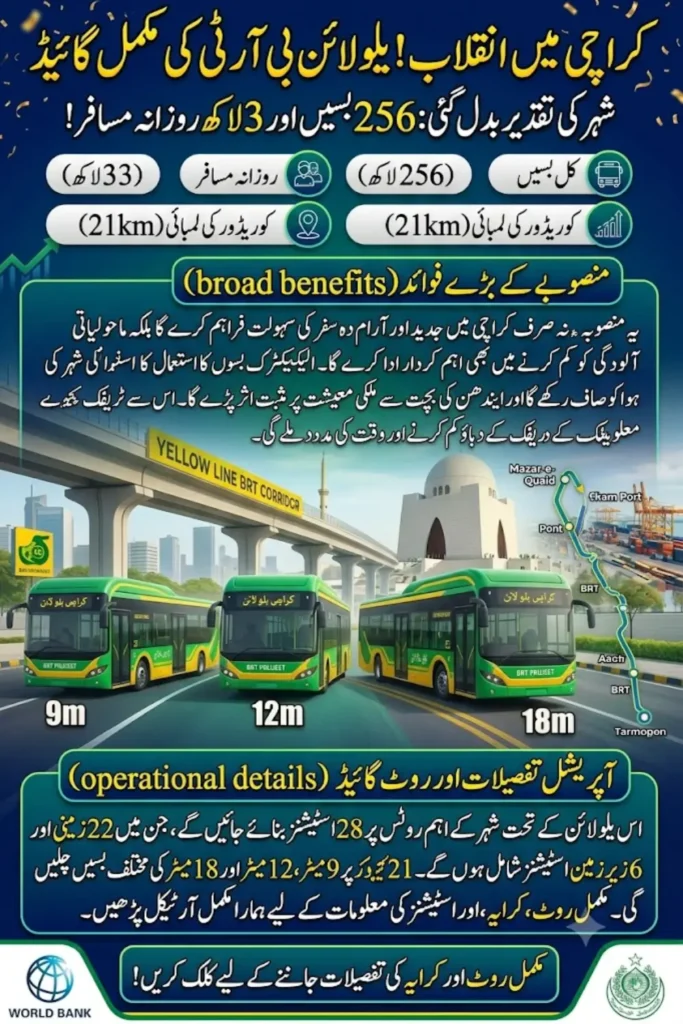
The Yellow Line BRT will operate on a dedicated 21-kilometer corridor stretching from Dawood Chowrangi to Numaish. The route will also connect with the common corridor leading toward Tower, providing additional accessibility for commuters traveling to central business districts and commercial areas.
The dedicated lane system is designed to minimize delays caused by traffic congestion. Unlike conventional buses that must compete with other vehicles on crowded roads, BRT buses will operate within their own corridor, allowing for more predictable and efficient travel times.
This dedicated infrastructure is expected to significantly improve the daily commuting experience for passengers.
Stations and Infrastructure
The Karachi Yellow Line BRT Project will feature a total of 28 stations strategically located along the route.
Among these stations:
- 22 stations will be built at ground level.
- 6 stations will be constructed underground.
The station design aims to provide convenient access for passengers while ensuring smooth boarding and disembarkation processes. Modern facilities, passenger information systems, and improved safety features are expected to enhance the overall user experience.
The station network has been carefully planned to maximize accessibility for residents living and working along the corridor.
Fleet Composition of the Karachi Yellow Line BRT Project
A major highlight of the project is its fully electric bus fleet, which supports cleaner and more environmentally friendly transportation.
The planned fleet will include:
- 19 electric buses measuring 9 meters in length.
- 133 electric buses measuring 12 meters in length.
- 104 articulated buses measuring 18 meters in length.
In addition, authorities have included an 8 percent reserve capacity to ensure uninterrupted operations and maintain service reliability during peak hours or maintenance periods.
The use of electric buses is expected to reduce emissions while supporting Karachi’s long-term environmental goals.
Passenger Capacity and Ridership Estimates
The Karachi Yellow Line BRT Project has been designed to accommodate a large number of daily commuters.
According to project estimates, the system will serve between 260,000 and 300,000 passengers every day. On an annual basis, ridership is projected to reach nearly 78 million passengers.
These figures highlight the growing demand for efficient public transportation in Karachi. With a rapidly increasing population and rising traffic congestion, the new transit system is expected to become a vital transportation option for residents across the city.
The high passenger capacity will help reduce pressure on existing transportation services and improve overall mobility.
Route Network and Feeder Services
To maximize accessibility, the transport network will operate through a combination of direct and feeder routes.
The system will include:
- Six direct routes operating along major travel corridors.
- Three feeder routes connecting nearby neighborhoods to the main BRT corridor.
This integrated route structure will make it easier for passengers from surrounding areas to access the Yellow Line without requiring lengthy or complicated transfers.
The feeder services are expected to increase ridership while extending the benefits of the BRT system to a larger portion of Karachi’s population.
Travel Speed and Traffic Benefits
One of the biggest advantages of the Karachi Yellow Line BRT Project is the significant improvement in travel speed.
Project documents indicate that buses will operate at average speeds ranging from 21 to 26 kilometers per hour. This is considerably faster than current traffic conditions in many parts of Karachi, where average vehicle speeds often fall below 10 kilometers per hour.
Faster travel times will allow commuters to reach their destinations more efficiently, reducing time spent in traffic and improving overall productivity.
The dedicated corridor will also contribute to smoother traffic flow by encouraging greater use of public transportation and reducing dependence on private vehicles.
Expected Impact on Karachi’s Transportation System
The Karachi Yellow Line BRT Project is expected to bring substantial benefits to the city’s transportation network. By providing a reliable, high-capacity, and environmentally friendly transit system, the project will help address several long-standing urban mobility challenges.
Key expected benefits include:
- Reduced traffic congestion.
- Faster and more predictable travel times.
- Improved access to public transportation.
- Lower vehicle emissions through electric buses.
- Better connectivity between residential and commercial areas.
- Enhanced passenger comfort and safety.
The project also supports Karachi’s broader goals of sustainable urban development and modern transportation infrastructure.
Conclusion
The Karachi Yellow Line BRT Project represents a major step forward for public transportation in Karachi. With a fleet of 256 electric buses, a dedicated 21-kilometer corridor, 28 stations, and the capacity to serve up to 300,000 passengers daily, the system has the potential to significantly improve urban mobility.
Supported by the World Bank and integrated into the Karachi Breeze Network, the project will provide residents with a faster, cleaner, and more efficient travel option. As Karachi continues to grow, investments in modern transportation systems like the Yellow Line BRT will play a critical role in meeting the city’s future mobility needs and improving the quality of life for millions of commuters.
Punjab Green Tractors Scheme 2026: 20,000 Subsidized Tractors Announced for Farmers