
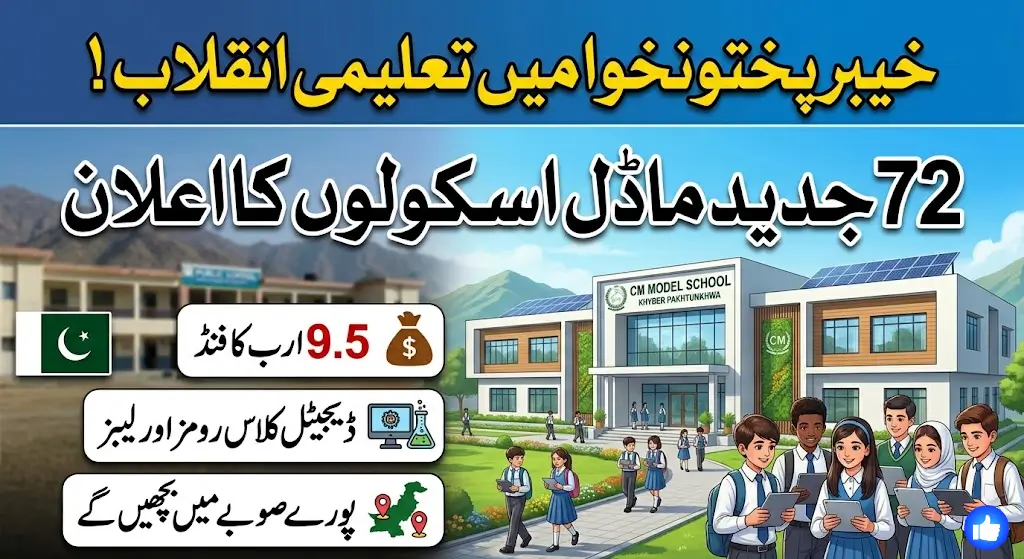
CM Model Schools Khyber Pakhtunkhwa
CM Model Schools Khyber Pakhtunkhwa. The Government of Khyber Pakhtunkhwa has announced a major education reform initiative aimed at improving the quality of learning and expanding access to modern educational facilities across the province. Under the new plan, CM Model Schools Khyber Pakhtunkhwa will be established in different districts to provide students with high-quality education, modern infrastructure, and innovative learning opportunities.
The initiative was discussed during a meeting chaired by Chief Minister Sohail Afridi, who directed the education department to begin work on a legal framework for the establishment of these schools. The project reflects the provincial government’s commitment to transforming the education sector and preparing students for future academic and professional challenges.
Establishment of 72 CM Model Schools Khyber Pakhtunkhwa
According to officials, the government plans to establish 72 CM Model Schools Khyber Pakhtunkhwa for boys and girls during the next fiscal year. These schools will be located across various districts to ensure that quality education is accessible to students from different regions of the province.
The model schools are expected to serve as centers of excellence, setting new standards for public education. By offering improved facilities and modern teaching practices, these institutions will help bridge educational gaps and create better opportunities for students.
The initiative is part of a broader strategy to strengthen the education system and ensure that children receive an education that meets the demands of the modern world.

Development of a Legal Framework
A key component of the project is the creation of a dedicated legal and regulatory framework. Chief Minister Sohail Afridi has instructed the education department to begin drafting the necessary laws and regulations to support the operation of the model schools.
The legal framework will define the structure, governance, and responsibilities of the institutions. It will also establish guidelines for administration, staffing, curriculum implementation, and performance evaluation.
Having a clear legal foundation is important for ensuring transparency, accountability, and consistency across all model schools. It will also help maintain high educational standards and support the long-term success of the initiative.
Modern Educational Facilities and Teaching Standards
One of the main goals of the CM Model Schools Khyber Pakhtunkhwa project is to provide students with access to modern educational facilities and highly qualified teachers.
The schools will be equipped with contemporary infrastructure, including well-designed classrooms, science laboratories, computer labs, libraries, and other essential learning resources. These facilities will create a positive learning environment that encourages academic achievement and personal development.
In addition, the government plans to recruit trained and experienced faculty members who can deliver quality education using modern teaching methods. Teachers will be encouraged to adopt innovative approaches that promote creativity, critical thinking, and problem-solving skills among students.
The combination of advanced facilities and professional teaching staff is expected to significantly improve learning outcomes.
Budget and Funding Details
The provincial government has allocated substantial resources for the implementation of the project. According to the briefing presented during the meeting, the estimated cost of establishing the CM Model Schools Khyber Pakhtunkhwa is approximately Rs. 9.5 billion.
This investment demonstrates the government’s strong commitment to educational development and human capital growth. The allocated funds will be used for school construction, infrastructure development, recruitment of staff, administrative operations, and educational resources.
Experts believe that such investments can contribute to long-term improvements in educational quality and economic development by producing a skilled and knowledgeable workforce.
Governance and Administration Structure
To ensure efficient management, the government plans to establish a centralized board of governors for the model schools. This governing body will oversee administration, policy implementation, and institutional performance.
The board of governors will play a crucial role in maintaining educational standards and ensuring that all schools operate according to the established framework. It will also monitor progress, evaluate outcomes, and recommend improvements where necessary.
A centralized governance system is expected to promote consistency, accountability, and effective decision-making across all institutions.
Modern Curriculum and Assessment System
One of the most significant features of the CM Model Schools Khyber Pakhtunkhwa initiative is the introduction of a modern curriculum and assessment system.
Officials informed the meeting that the curriculum will differ from the conventional public school model. Instead, it will be designed to align with modern educational standards and future workforce requirements.
The curriculum will focus not only on academic knowledge but also on practical skills, communication, digital literacy, innovation, and critical thinking. This approach aims to prepare students for higher education and the rapidly changing job market.
Similarly, the assessment system will be updated to measure student performance more effectively and encourage continuous learning rather than relying solely on traditional examination methods.
Expected Benefits for Students and the Education Sector
The establishment of CM Model Schools Khyber Pakhtunkhwa is expected to bring numerous benefits to students, teachers, and the overall education system.
Key expected benefits include:
- Improved quality of education across the province.
- Access to modern learning facilities and technology.
- Better academic performance and student engagement.
- Enhanced skill development and career readiness.
- Equal educational opportunities for boys and girls.
- Increased innovation in teaching and learning practices.
- Stronger preparation for higher education and future employment.
These improvements can contribute significantly to the social and economic development of Khyber Pakhtunkhwa.
Conclusion
The CM Model Schools Khyber Pakhtunkhwa initiative represents a major step toward educational transformation in the province. With plans to establish 72 modern schools, introduce a dedicated legal framework, recruit qualified teachers, and implement an updated curriculum, the government aims to create a world-class learning environment for students.
Backed by an investment of Rs. 9.5 billion, the project has the potential to improve educational standards, promote innovation, and equip students with the skills needed for future success. If implemented effectively, the initiative could become a model for educational reform and help shape a brighter future for generations to come.
Punjab Child Marriage Law 2026: 18-Year Age Limit Approved for All