Latest Update
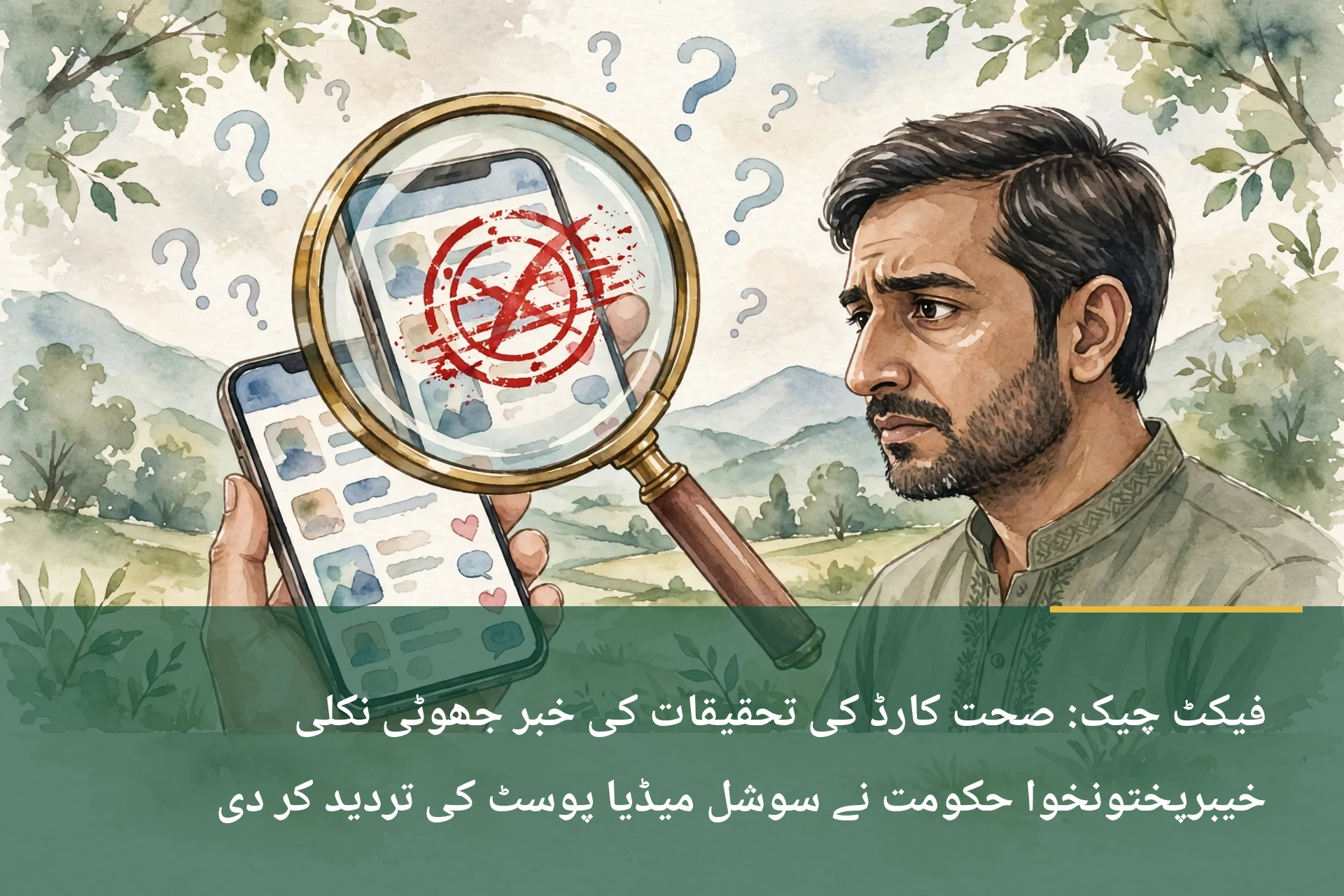
On October 13, 2026, Khyber Pakhtunkhwa’s Special Assistant for Information, Samar Haroon Bilour, rejected a social media post attributed to retired Lieutenant General Nigar Johar Khan as fake. The viral post claimed that Nigar Johar had announced an investigation into the province’s Sehat Card program as her top priority. Bilour dismissed the claim as fake and malicious propaganda, confirming that no such announcement was made.
The Viral Claim
The post circulating on social media carried the name of retired Lt Gen Nigar Johar Khan and stated that she had declared an investigation into the Sehat Card program a top priority. Because the Sehat Card is one of KP’s most well-known public welfare programs, the claim spread quickly, with many users sharing it as if it were an official statement.
Our Verdict: FALSE
The claim is false. No probe into the Sehat Card program was announced by Nigar Johar Khan. The KP government’s information spokesperson has categorically denied the post, calling it fabricated propaganda. There is no record of any such statement from any official channel.
Key Details
| Aspect | Detail |
|---|---|
| The claim | A social media post attributed to retired Lt Gen Nigar Johar Khan said she announced an investigation into the Sehat Card program as a top priority |
| Verdict | False — the post is fake |
| Who responded | Samar Haroon Bilour, KP Special Assistant for Information |
| When | October 13, 2026 |
| Official position | The post is fake and malicious propaganda against a person of integrity; no probe was announced |
| Related fake item | A fake notification claiming the termination of Professor Dr. Nosherwan Barki was also rejected |
| Government stance | No political victimization; commitment to public service and transparency; accountability for negligence or irregularities without discrimination |

Official Response
Samar Haroon Bilour did not stop at denying the Sehat Card post. She also rejected a fake notification claiming that Professor Dr. Nosherwan Barki had been terminated, making it clear that fabricated documents are being circulated to create confusion. Bilour stressed that the KP government will not engage in political victimization and will continue its work in public service and transparency.
She added an important clarification on accountability: anyone found responsible for negligence or irregularities will be held accountable without discrimination. In other words, the government is not ruling out genuine scrutiny of any program — but no probe has been announced through a random social media post, and the specific claim about Nigar Johar is invented.
Red Flags That Expose Fake Posts
- No official source: The claim appeared only on social media. No government press release, no official account, and no credible news outlet carried the announcement.
- Attribution to a prominent name: Fake posts often borrow the name of a respected public figure to gain instant credibility.
- Emotional trigger: The Sehat Card is a sensitive welfare topic. Claims about investigating it are designed to provoke anger and shares.
- Vague wording: The post used dramatic phrases like “top priority” without dates, reference numbers, or any verifiable detail.
- Paired with other fakes: The simultaneous circulation of a fake termination notification about Dr. Nosherwan Barki is a classic pattern of a coordinated misinformation push.
How to Verify Health-Program News Before Sharing
- Check the official source first: Look at the KP government’s official website, the health department’s pages, and verified social media accounts of government spokespersons.
- Search credible news outlets: If a major announcement were real, established news organizations would report it. If only unknown pages carry the story, be skeptical.
- Look for a press release or notification number: Real government decisions come with reference numbers, dates, and signatures. Screenshots without them are suspect.
- Wait before sharing: Viral posts reward speed. Take a few minutes to verify — a short delay costs nothing, but spreading a fake can damage reputations.
- Reverse-check the person named: Search whether the named person has any official role connected to the claim. Retired officials do not announce government investigations on social media.
Common Mistakes to Avoid When Sharing Health-Program News
- Sharing because the name sounds credible: A respected name on a post does not make the post genuine. Verify the account and the source.
- Trusting screenshots of “notifications”: Fake government notifications are easy to forge. Cross-check with the issuing department.
- Forwarding without reading the full story: Many people share based on the headline alone, which is exactly what misinformation creators count on.
- Assuming viral means true: Thousands of shares prove a post is popular, not that it is accurate.
- Ignoring official denials: When a government spokesperson publicly rejects a claim, that denial deserves the same attention as the original viral post.
Frequently Asked Questions
Did Nigar Johar announce a probe into the Sehat Card program?
No. The social media post attributed to her is fake. KP’s Special Assistant for Information, Samar Haroon Bilour, confirmed on October 13, 2026, that no such announcement was made.
Who denied the viral claim?
Samar Haroon Bilour, the Khyber Pakhtunkhwa Special Assistant for Information, rejected the post and called it fake and malicious propaganda against a person of integrity.
What exactly did the fake post claim?
It claimed that retired Lt Gen Nigar Johar Khan had announced an investigation into the Sehat Card program as her top priority. This claim has no basis in any official statement.
Was there also a fake notification about Dr. Nosherwan Barki?
Yes. Alongside the Sehat Card post, a fake notification claiming the termination of Professor Dr. Nosherwan Barki was also circulated and rejected by the KP government as fabricated.
Will the KP government investigate anyone over program irregularities?
Bilour stated that the government will hold anyone responsible for negligence or irregularities accountable without discrimination — but no specific probe into the Sehat Card has been announced.
How can I check whether Sehat Card news is real?
Verify through the KP health department’s official channels, the provincial government’s verified accounts, and established news outlets. Be cautious of posts that appear only on social media with no official backing.
What should I do if I already shared the fake post?
Delete the share if possible, and consider posting a correction so others who saw it get the accurate information. Sharing the official denial helps undo the damage.
Final Thoughts
Fake news about welfare programs like the Sehat Card spreads fast because it touches something people care deeply about — their health and their family’s security. The KP government’s swift denial of this fabricated post is a reminder of how easily a respected name can be misused to manufacture outrage. Before you hit share on the next sensational claim about a health program, take a breath and check the source. A few minutes of verification protects not just the truth, but the reputation of people who never said what the post claims they said.
Related: Punjab Launches Mobile Health Units for Industrial Workers — how another province is expanding verified public health services.