Latest Update
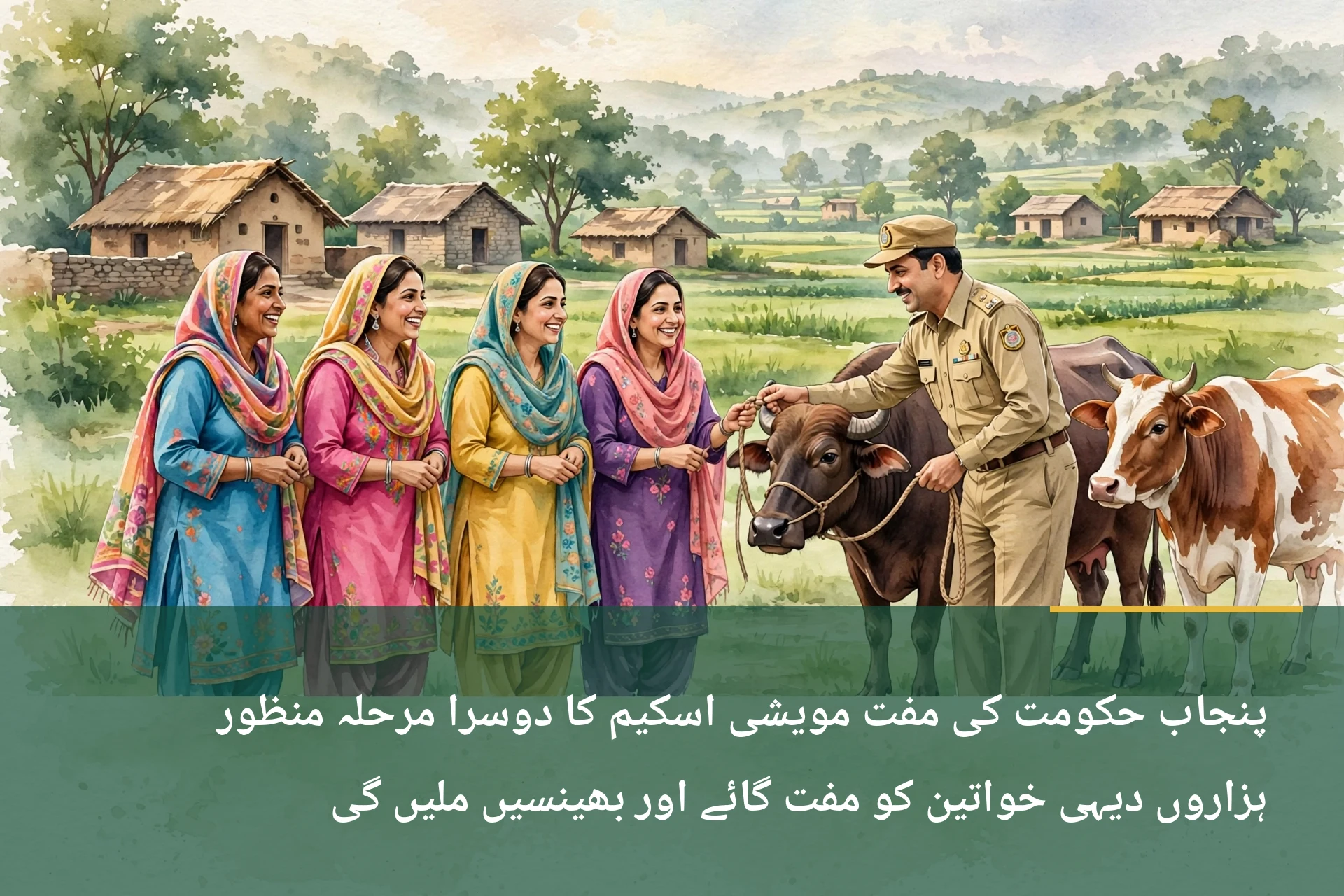
Punjab Chief Minister Maryam Nawaz has approved the second phase of the province’s free livestock distribution program, under which thousands more rural women will receive free cows and buffaloes. The chief minister directed the Livestock and Dairy Development Department to finalize all preparations for the new phase, setting the stage for a major expansion of one of Punjab’s flagship women-empowerment schemes.
The program’s stated goals are women’s financial independence, poverty reduction, and higher milk production in rural areas. By giving deserving women a productive asset — a milk-giving animal — the government aims to create a steady source of household income that does not depend on daily-wage work.
Key Details
| Aspect | Detail |
|---|---|
| Scheme | Punjab free livestock distribution program, Phase 2 |
| Approved by | Chief Minister Maryam Nawaz, October 2026 |
| Beneficiaries | Thousands more rural women across Punjab |
| Animals | Free cows and buffaloes |
| Goals | Women’s financial independence, poverty reduction, higher rural milk production |
| Phase 1 budget | Rs 2 billion |
| Phase 1 coverage | 11,000 deserving women across 12 districts of South Punjab; initial target of 4,870 animals |
| Priority group | Widows and divorced women |
| Implementing body | Livestock and Dairy Development Department |

What Phase 2 Will Deliver
With the chief minister’s approval, the Livestock and Dairy Development Department must now finalize phase-2 preparations — which means beneficiary selection criteria, district-wise targets, procurement of healthy animals, and distribution logistics. While the exact district list and timelines for phase 2 have not been announced yet, the government has confirmed that the scale will reach thousands of additional rural women.
The logic of the scheme is straightforward. A cow or buffalo is not a one-time handout; it is an income-generating asset. A family with a milk-giving animal can sell surplus milk daily, producing regular cash flow. For women in rural Punjab with limited employment options, this can mean the difference between dependence and self-reliance.
How Phase 1 Worked
The first phase of the program was a Rs 2 billion initiative that provided free livestock to 11,000 deserving women across 12 districts of South Punjab, with an initial target of distributing 4,870 animals. South Punjab was chosen because it has some of the province’s highest poverty levels and large rural populations where livestock farming is already a familiar way of life.
Priority in the first phase went to widows and divorced women — groups that often face the harshest economic vulnerability in rural society. By giving them a productive asset rather than a cash grant, the program aimed to create lasting income instead of temporary relief.
Who Gets Priority
Based on the first phase, the priority categories are expected to remain similar: widows and divorced women first, followed by other deserving women from low-income rural households. The emphasis on women is deliberate — when a woman controls an income source, household spending on children’s nutrition, health, and education typically improves.
Exact eligibility criteria for phase 2 — such as income thresholds, documentation requirements, and the application process — will be announced by the Livestock and Dairy Development Department as preparations are finalized.
What This Means for Rural Women
For a rural woman with no independent income, receiving a cow or buffalo can be transformative. Daily milk sales provide steady cash, the animal’s calves add to the asset base over time, and the work fits around household responsibilities. The scheme also supports Punjab’s broader goal of increasing milk production, which benefits both rural incomes and the province’s dairy supply.
That said, livestock ownership also brings responsibilities: feed, shelter, veterinary care, and time. Beneficiaries will need basic animal-care knowledge to protect their asset. Women considering the scheme should plan for these practical realities alongside the income opportunity.
How to Stay Updated
- Watch for the official announcement: The Livestock and Dairy Development Department will publish phase-2 eligibility criteria, the application process, and district lists. Rely on official government channels.
- Prepare your documents: CNIC and proof of household status are typically required for welfare schemes. Having them ready avoids delays.
- Beware of middlemen: Genuine government schemes do not charge application fees through agents. Do not pay anyone who promises to “secure” an animal for you.
- Learn basic animal care: If selected, attend any training offered on feeding, vaccination, and shelter — a healthy animal is a productive one.
Common Mistakes to Avoid
- Paying agents for “guaranteed” selection: No agent can guarantee a place in a government scheme. Applications go through official channels only.
- Believing fake beneficiary lists on social media: Unofficial lists and “registration forms” circulating online are often scams. Wait for the department’s official notice.
- Applying with incomplete documents: Missing paperwork is the most common reason deserving applicants get delayed or rejected.
- Ignoring animal-care responsibilities: An animal that is poorly fed or not vaccinated loses value fast. The asset only pays off with proper care.
- Selling the animal immediately: The scheme’s purpose is long-term income through milk, not a one-time cash sale. Selling defeats the program’s goal.
Frequently Asked Questions
What is the Punjab free livestock scheme’s second phase?
It is the expanded phase of Punjab’s program to distribute free cows and buffaloes to rural women, approved by Chief Minister Maryam Nawaz in October 2026. Thousands more women will benefit in this phase.
Who approved the second phase?
Punjab Chief Minister Maryam Nawaz approved it and directed the Livestock and Dairy Development Department to finalize preparations.
What did the first phase cover?
The Rs 2 billion first phase provided free livestock to 11,000 deserving women across 12 districts of South Punjab, with an initial target of 4,870 animals.
Who gets priority in the scheme?
Widows and divorced women are given priority, so they can earn a steady income through livestock farming, followed by other deserving women from low-income rural households.
What are the goals of the program?
Women’s financial independence, poverty reduction, and increased milk production in rural areas.
How can women apply for phase 2?
The application process has not been announced yet. The Livestock and Dairy Development Department will publish eligibility criteria and the application method as phase-2 preparations are finalized. Avoid paying any agent or trusting unofficial forms.
Which districts will phase 2 cover?
The district list for phase 2 has not been announced. Phase 1 focused on 12 districts of South Punjab; watch official government channels for the phase-2 announcement.
Final Thoughts
The approval of the second phase shows the Punjab government is doubling down on a model that works: putting productive assets directly into the hands of rural women. Cash assistance helps for a month; a milk-giving animal helps for years. The success of phase 2 will depend on transparent beneficiary selection, healthy animals, and support for first-time livestock owners. For the thousands of women waiting for their turn, the message is simple — keep your documents ready, ignore the middlemen, and watch for the official announcement.
Related: CM Punjab Khud Mukhtar Program Announces Jobs — another Punjab initiative creating earning opportunities for women.