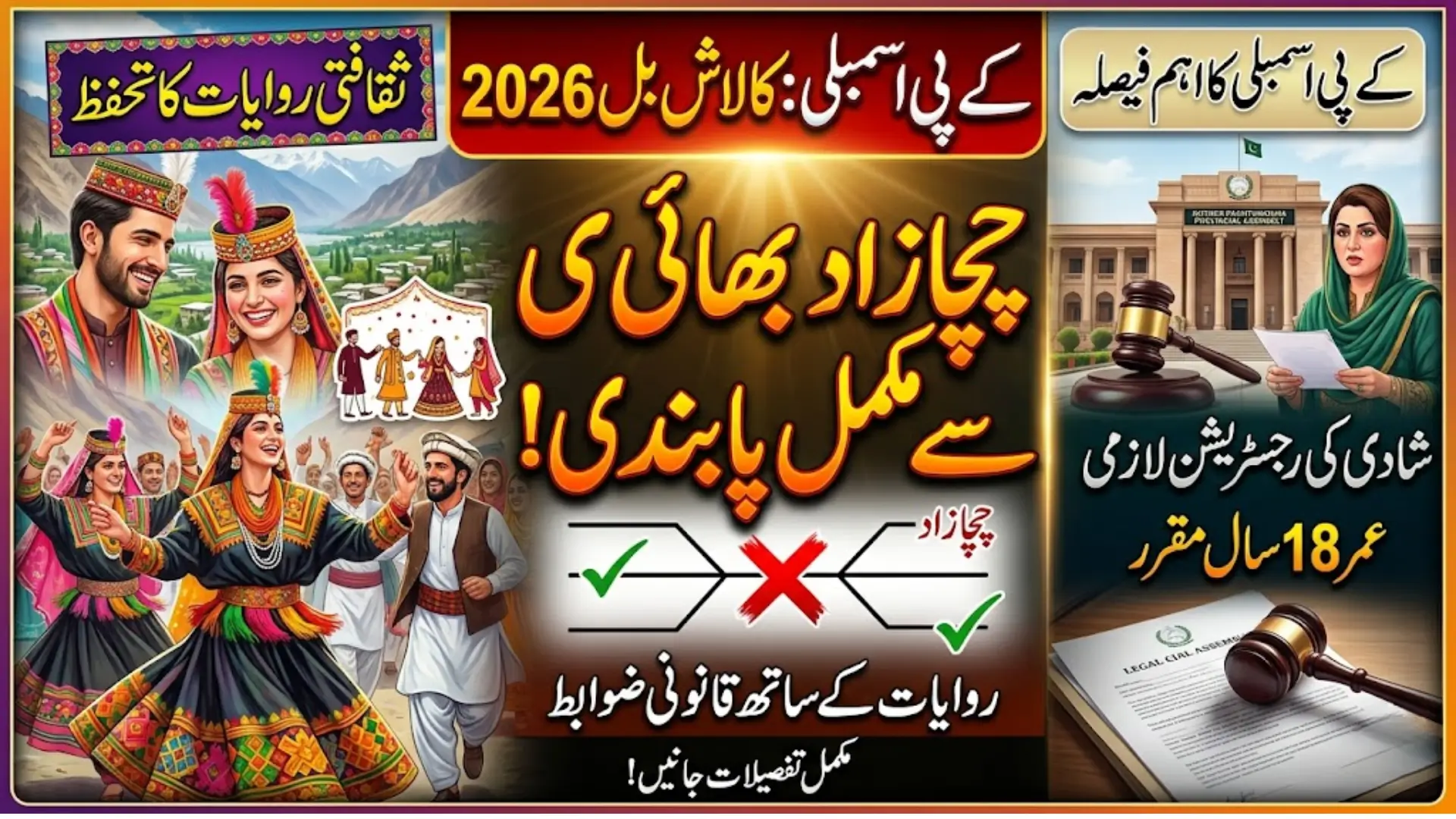
The Kalash Marriage Bill 2026 has been introduced in the Khyber Pakhtunkhwa (KP) Assembly with the aim of formally regulating marriage practices within the Kalash community while safeguarding its unique cultural traditions. The proposed law seeks to create a clear legal framework for marriages, divorces, and family matters while ensuring that the traditional customs of the Kalash people remain respected.
This initiative reflects the provincial government’s effort to balance legal oversight with cultural preservation for one of Pakistan’s most distinctive communities.
Introduction to the Kalash Marriage Bill 2026
The Kalash Marriage Bill 2026 proposes a structured system for marriage registration and family-related matters within the Kalash community. The legislation focuses on providing legal recognition to marriages while protecting the long-standing cultural traditions of the community.
The Kalash community, known for its rich heritage and distinct cultural identity, has traditionally followed its own customs in matters related to marriage and family life. With this bill, the government aims to ensure that these practices continue while also introducing a formal legal system to record and regulate marriages.
Presentation of the Bill in the Provincial Assembly
The Kalash Marriage Bill 2026 was presented in the provincial assembly by Local Government Minister Mina Khan Afridi. During the session, the minister explained the key provisions of the bill and its importance for regulating marriage-related matters in the Kalash community.

After its introduction, the Speaker of the Assembly referred the bill to the relevant committee. The committee will review the draft legislation, consult stakeholders, and examine its provisions before it moves forward for final approval.
This process ensures that the bill is carefully evaluated and that the perspectives of the Kalash community and legal experts are considered.
Legal Framework for Marriage in the Kalash Community
One of the main goals of the Kalash Marriage Bill 2026 is to establish clear legal conditions for marriage. According to the proposed law, several requirements must be fulfilled before a marriage can take place.
First, the marriage must be based on the mutual consent of both individuals. This provision ensures that both parties willingly agree to the marriage without pressure or coercion.
Second, the minimum legal age for marriage has been set at 18 years. This measure aims to protect young individuals and align marriage regulations with broader legal standards.
Additionally, the bill requires that both individuals must be mentally sound at the time of marriage, ensuring that they are capable of making informed decisions about their future.
These conditions are designed to strengthen legal protection while maintaining respect for cultural practices.
Ban on Cousin Marriages
A significant provision included in the Kalash Marriage Bill 2026 is the complete ban on cousin marriages within the Kalash community.
This clause introduces a major regulatory change. By restricting cousin marriages, the bill establishes a new legal boundary within the community’s marital practices.
Despite this restriction, the bill still emphasizes respect for the cultural traditions of the Kalash people in other aspects of marriage and family life.
Protection of Kalash Cultural Traditions
While introducing legal regulations, the Kalash Marriage Bill 2026 also places strong emphasis on protecting the cultural identity of the community.
The bill recognizes the importance of traditional customs and aims to ensure that these practices remain an integral part of marriage and family matters. Instead of replacing community traditions, the law is designed to work alongside them.
This approach helps maintain the cultural heritage of the Kalash people while bringing greater legal clarity to family-related matters.
Mandatory Marriage Registration System
Another key feature of the Kalash Marriage Bill 2026 is the introduction of a mandatory marriage registration system.
Under the proposed law, all marriages must be officially registered through appointed local registrars. These registrars will be responsible for documenting marriage details and ensuring that the legal requirements are met.
Government offices will also maintain official records of marriages, divorces, and separations. This record-keeping system will help create a reliable database of family-related events within the community.
Such documentation can help resolve disputes, protect legal rights, and provide transparency in marital matters.
Divorce and Separation According to Customary Practices
The Kalash Marriage Bill 2026 also outlines how divorce and separation cases will be handled.
According to the draft legislation, divorce matters, including separation and khula, will be resolved in accordance with Kalash customary practices. This provision ensures that traditional dispute-resolution methods remain central to the process.
By allowing customary systems to guide divorce procedures, the bill respects the community’s long-standing social structure while giving these practices legal recognition.
Inheritance Rights for Widows
The proposed legislation also addresses inheritance rights following the death of a husband.
Under the Kalash Marriage Bill 2026, the inheritance rights of widows will continue to be governed by the traditional systems of the Kalash community. This provision acknowledges the importance of customary practices in managing family property and inheritance matters.
By recognizing these traditional arrangements, the bill supports the preservation of the community’s cultural values and social structure.
Penalties for Violations
To ensure compliance with the new regulations, the Kalash Marriage Bill 2026 includes penalties for violations.
Individuals who provide false information during marriage registration or violate the provisions of the law may face fines or imprisonment. These penalties are intended to encourage transparency and prevent misuse of the legal system.
The enforcement measures also strengthen the credibility of the proposed legal framework.
Next Steps for the Kalash Marriage Bill 2026
After its introduction in the provincial assembly, the Kalash Marriage Bill 2026 has been referred to the relevant committee for further examination.
The committee will conduct a detailed review of the bill, gather feedback, and may suggest amendments if necessary. Once this process is complete, the bill will be presented again for final consideration and approval.
If passed, the legislation could play an important role in formally regulating marriages within the Kalash community while ensuring that its unique cultural traditions remain protected.
Conclusion
The Kalash Marriage Bill 2026 represents a significant step toward establishing a clear legal framework for marriage and family matters within the Kalash community. By setting rules for consent, marriage age, and registration while respecting traditional customs, the bill seeks to balance legal oversight with cultural preservation.
If approved, the legislation could help protect individual rights, improve record-keeping, and provide legal clarity for marriages and divorces within the community while ensuring that the cultural traditions of the Kalash people continue to be respected and preserved.
Sargodha Class 8 Result 2026: Check Your PECTAA Exam Scores Online at pectaa.edu.pk