Latest Update
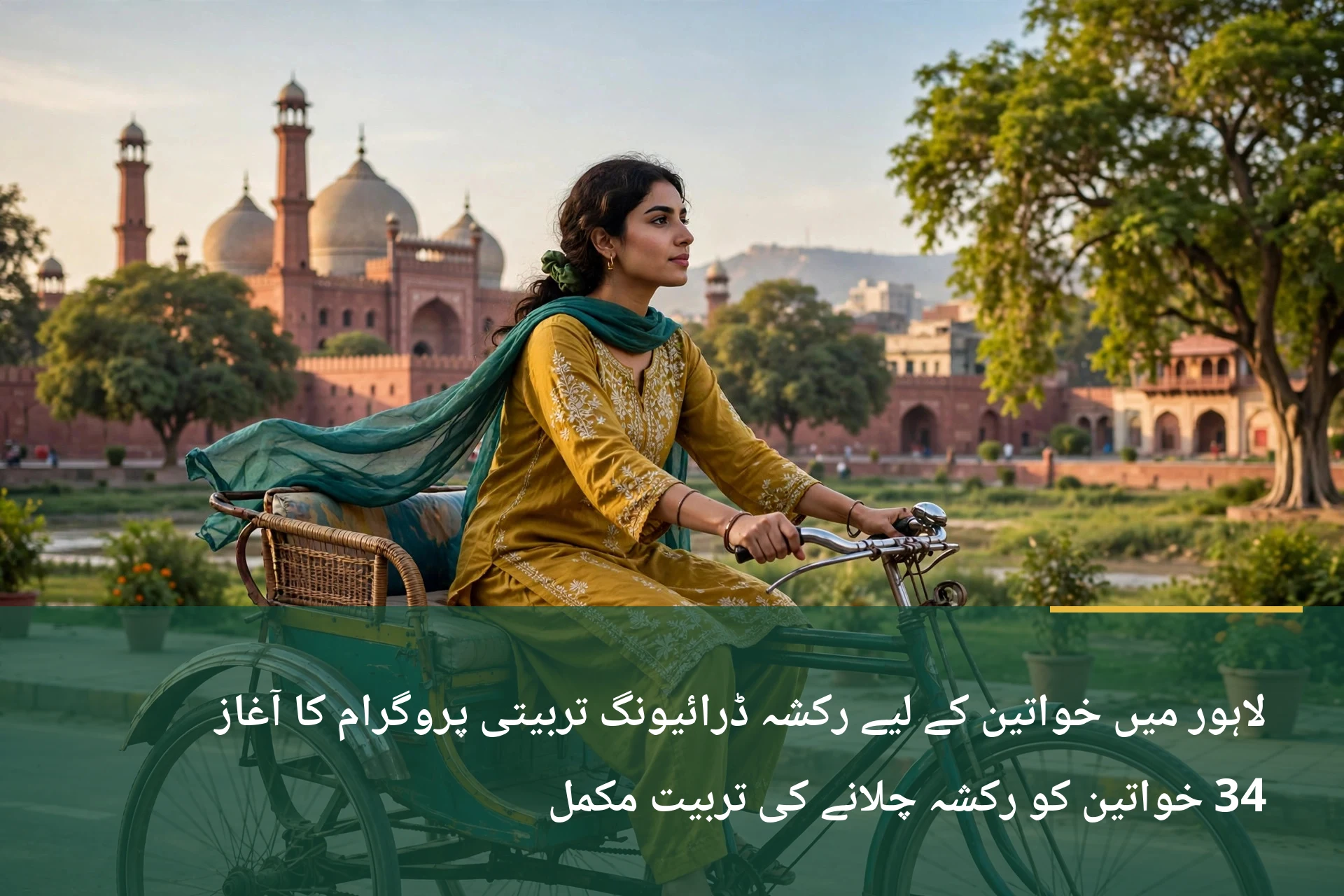
Lahore Traffic Police have trained 34 women to drive rickshaws under a new initiative aimed at expanding employment opportunities and promoting women’s economic independence. The program was organized in collaboration with a private university, on the special instructions of Punjab Chief Minister Maryam Nawaz Sharif.
The training took place at driving schools in Bahria Town and Manawan, where the participants completed a structured course covering rickshaw handling, road safety and traffic rules. Officials say the initiative is part of a wider push to bring more women into the workforce and help them build self-reliant lives.
Key Details
| Aspect | Detail |
|---|---|
| Organizer | Lahore Traffic Police |
| Trainees | 34 women completed the rickshaw driving training |
| Training locations | Driving schools in Bahria Town and Manawan, Lahore |
| Collaborating partner | A private university |
| CM’s instructions | Program launched on the special instructions of Punjab CM Maryam Nawaz Sharif |
| CTO’s name | Chief Traffic Officer Lahore Syed Abdul Raheem Shirazi |
| CTO’s key quotes | “The program helps women earn a living by driving rickshaws themselves” — “It gives more than driving skills: financial independence and self-reliant lives” — “Women play an important role in social and economic development” — “Lahore Traffic Police will continue promoting women’s empowerment, employment and financial stability” |

What the Training Covers
The course started with the fundamentals of rickshaw driving: steering, clutch and brake control, navigating narrow lanes, turning safely and parking. Because a rickshaw handles very differently from a car or a motorcycle, instructors gave the trainees extended hands-on practice until they could operate the vehicle confidently in real traffic.
Road safety and traffic rules formed a major part of the curriculum — lane discipline, speed limits, right of way, road signs and signals, and how to handle breakdowns and emergencies. The emphasis was on making the women safe, rule-abiding drivers from day one.
Beyond technical skills, the program focused on building confidence on the road. Many trainees had never driven a public transport vehicle before, so instructors worked to ensure they could face the city’s traffic and passengers without hesitation.
Who Can Join Future Rounds
Women interested in future rounds should watch for announcements from Lahore Traffic Police, usually shared through the department’s official social media pages and the local press. The city’s driving schools are another reliable source, as new batches are often coordinated through them.
Formal criteria for upcoming rounds have not been announced yet, but typical requirements include being of legal driving age, holding a valid CNIC, and completing the full training course. Lahore already runs 12 driving schools offering car and scooter training for women, where more than 16,000 women have already learned to drive.
Why Rickshaw Driving Matters as an Income
Rickshaw driving offers genuine self-employment: the driver sets her own hours and keeps what she earns. For women who cannot take fixed-schedule jobs because of family responsibilities, that flexibility can be the difference between earning and not earning.
There is also a ready market. Many women passengers feel more comfortable travelling with a woman driver on the routes they use daily for work, school or shopping. Trained women rickshaw drivers can therefore tap into a loyal customer base from the start.
Common Mistakes to Avoid
The first mistake is assuming no license is needed. Driving a rickshaw commercially requires the proper license category, and operating without one invites fines and legal trouble. New drivers should confirm the licensing requirements before picking up passengers.
The second is skipping formal training. Informal learning may teach the basics, but it rarely covers defensive driving, passenger safety or emergency handling. A structured course builds those habits properly.
The third is ignoring traffic rules once training ends. Lane discipline, signal use and speed limits keep drivers safe — and safe driving is what keeps passengers coming back.
Frequently Asked Questions
How many women were trained in the program?
Thirty-four women completed the rickshaw driving training, conducted at driving schools in Bahria Town and Manawan.
Who organized the rickshaw training program?
Lahore Traffic Police organized the program in collaboration with a private university, on the special instructions of Punjab Chief Minister Maryam Nawaz Sharif.
Where did the training take place?
The training was held at driving schools in Bahria Town and Manawan in Lahore.
What did the Chief Traffic Officer say about the program?
Chief Traffic Officer Lahore Syed Abdul Raheem Shirazi said the program helps women earn a living by driving rickshaws themselves, giving them more than driving skills — financial independence and self-reliant lives. He added that women play an important role in social and economic development, and that Lahore Traffic Police will continue promoting women’s empowerment, employment and financial stability.
Will there be more rounds of the program?
Dates for the next round have not been announced. Interested women should follow Lahore Traffic Police announcements and check with the city’s driving schools for updates.
How many women have learned to drive through Lahore’s driving schools so far?
More than 16,000 women have already learned to drive at Lahore’s 12 driving schools, which offer car and scooter training for women.
Why is rickshaw driving a good income option for women?
It offers self-employment with flexible hours, and there is strong demand among women passengers who prefer travelling with women drivers.
Final Thoughts
The Lahore rickshaw training program is a small batch with a big message: when women are given practical skills and real opportunities, they build not just incomes but independent lives. With 34 women now trained, 16,000 more already driving, and provincial leadership backing such efforts, the initiative could become a model for other cities in Punjab. For more on such efforts, read about other women’s economic independence programs in Punjab.