Punjab Disease Prevention Program
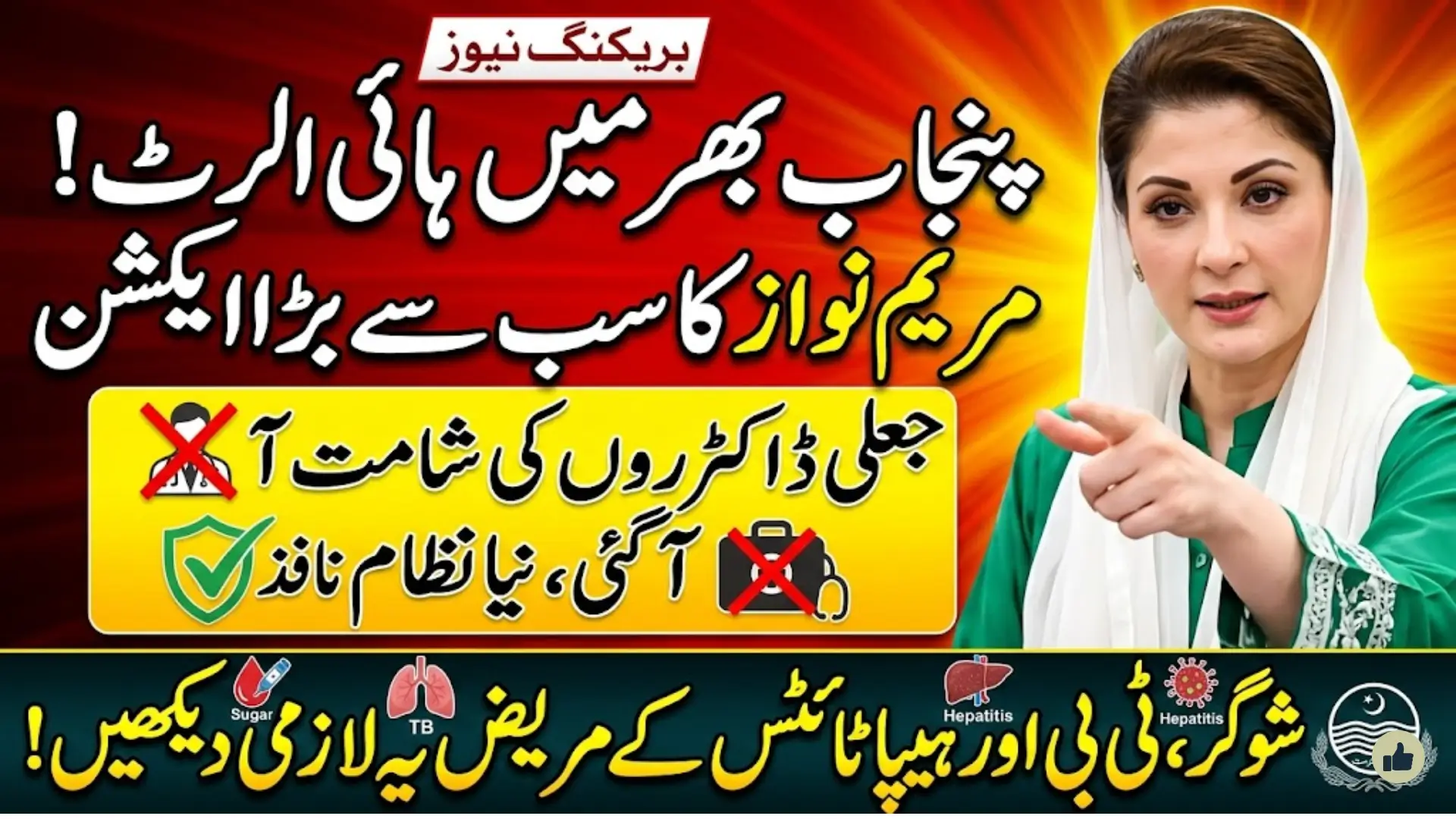
Punjab Disease Prevention Program. Good health is the foundation of a productive and happy life, yet millions of people across Punjab continue to suffer from preventable and treatable diseases simply because of a lack of awareness, inadequate healthcare facilities, and unchecked unsafe medical practices. Punjab Chief Minister Maryam Nawaz has taken a decisive and commendable step to address this reality by approving the launch of the Punjab Disease Prevention Program, a comprehensive province-wide health initiative designed to control the spread of major life-threatening illnesses and build a healthier future for all citizens of Punjab.
Program Overview and Objectives
The Punjab Disease Prevention Program is a high-priority government health initiative formally approved by Chief Minister Maryam Nawaz during a high-level meeting where senior officials briefed her on the program’s objectives and implementation strategy. The program takes a broad and multi-layered approach to public health, combining direct disease prevention efforts with large-scale public awareness campaigns to educate citizens across the province.
The core objective of the Punjab Disease Prevention Program is to reduce the burden of major diseases on Punjab’s population and healthcare system by focusing on prevention rather than just treatment. Officials have confirmed that the program aims to strengthen preventive healthcare infrastructure, reduce the overall disease burden, and promote healthier communities in every corner of the province. This shift from a reactive to a proactive approach to public health is exactly what Punjab’s healthcare system needs to make a lasting and meaningful difference.
Targeted Diseases and Public Awareness Campaign
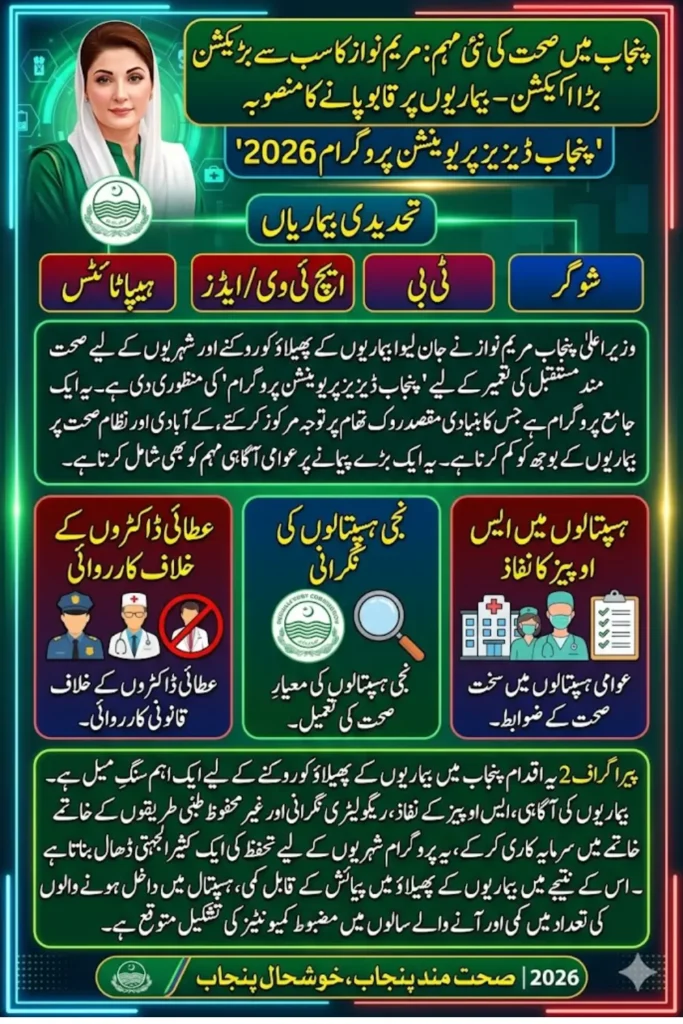
The Punjab Disease Prevention Program has identified four major life-threatening illnesses as its primary targets — diabetes, tuberculosis, HIV/AIDS, and hepatitis. These diseases were chosen because of their high prevalence across Punjab and the enormous burden they place on both individual patients and the province’s healthcare system.
Diabetes affects millions of Pakistanis and is closely linked to lifestyle factors that can be managed through education and early intervention. Tuberculosis remains a serious public health challenge in many parts of Punjab, particularly in densely populated urban areas. HIV/AIDS and hepatitis continue to spread in communities where awareness about transmission and prevention remains dangerously low.
To address these challenges, the program includes a large-scale public awareness campaign that will educate citizens about the causes, symptoms, prevention methods, and available treatments for each of these diseases. Chief Minister Maryam Nawaz specifically highlighted the critical importance of early detection, noting that recognizing symptoms at an early stage can play a decisive role in preventing serious complications and ultimately saving lives. When citizens are informed and empowered with knowledge, they are far more likely to seek timely medical attention and adopt healthier behaviors.
Strict Enforcement of Health SOPs in Public Hospitals
A key directive issued under the Punjab Disease Prevention Program is the strict enforcement of health standard operating procedures in public hospitals across the province. Chief Minister Maryam Nawaz personally directed health authorities to ensure that all public healthcare facilities comply fully with established health SOPs to prevent disease outbreaks and improve patient safety standards.
This directive addresses a long-standing concern in Pakistan’s public healthcare system, where inconsistent SOP compliance has contributed to hospital-acquired infections and preventable health complications. By making SOP enforcement a non-negotiable requirement, the Punjab Disease Prevention Program aims to create safer, cleaner, and more reliable public hospital environments for patients and healthcare workers alike.
Punjab Healthcare Commission’s Role in Private Hospitals
The Punjab Disease Prevention Program does not limit its oversight to public hospitals alone. Chief Minister Maryam Nawaz has also instructed the Punjab Healthcare Commission to take active steps to ensure that private hospitals and clinics across the province are also fully complying with health SOPs and safety standards.
This is a critically important aspect of the program because a large proportion of Punjab’s population receives healthcare services from private facilities. If private hospitals and clinics operate without proper standards and oversight, the risk of disease spread and patient harm remains high regardless of how well public facilities perform. By extending regulatory enforcement to the private healthcare sector, the Punjab Disease Prevention Program creates a more comprehensive and consistent standard of healthcare quality across Punjab.
Crackdown on Quack Doctors Across Punjab
One of the boldest and most necessary components of the Punjab Disease Prevention Program is the chief minister’s order for strict legal action against quack doctors operating across the province. Unqualified and unlicensed medical practitioners — commonly known as quacks — represent one of the most serious and often underestimated threats to public health in Pakistan.
Quack doctors regularly provide incorrect diagnoses, administer harmful treatments, and prescribe inappropriate medications to unsuspecting patients who often turn to them because of lower costs or limited access to qualified doctors. The consequences can be devastating — worsened conditions, drug-resistant infections, permanent disability, and in many cases death. Chief Minister Maryam Nawaz has made it clear that this dangerous practice will no longer be tolerated under the Punjab Disease Prevention Program, and that authorities are directed to take swift and decisive legal action against anyone found practicing medicine without proper qualifications and licensing.
Strengthening Preventive Healthcare and Healthier Communities
At its heart, the Punjab Disease Prevention Program is about transforming the way Punjab approaches public health — shifting the focus from treating illness after it occurs to preventing it from developing in the first place. This preventive healthcare model is widely recognized by global health organizations as the most effective and cost-efficient way to improve population health outcomes over the long term.
By investing in disease awareness, SOP enforcement, regulatory oversight, and the elimination of unsafe medical practices, the program creates a multi-layered shield of protection for Punjab’s citizens. Officials have expressed confidence that the Punjab Disease Prevention Program will lead to measurable reductions in disease prevalence, fewer hospitalizations, and stronger, more resilient communities across the province in the years ahead.
Conclusion
The Punjab Disease Prevention Program approved by Chief Minister Maryam Nawaz is a bold, comprehensive, and urgently needed response to the public health challenges facing Punjab today. By targeting dangerous diseases like diabetes, TB, HIV/AIDS, and hepatitis, enforcing health SOPs in both public and private hospitals, launching a province-wide awareness campaign, and cracking down on quack doctors, this initiative addresses the root causes of Punjab’s disease burden from multiple angles simultaneously. If implemented with consistency, transparency, and genuine commitment, the Punjab Disease Prevention Program has the very real potential to save thousands of lives, reduce suffering, and build a healthier and more prosperous Punjab for generations to come.
Lenovo ThinkPad T14 Gen 7 Officially Launched – Full Details Inside