Sindh Private Schools Ban on Selling Books and Uniforms
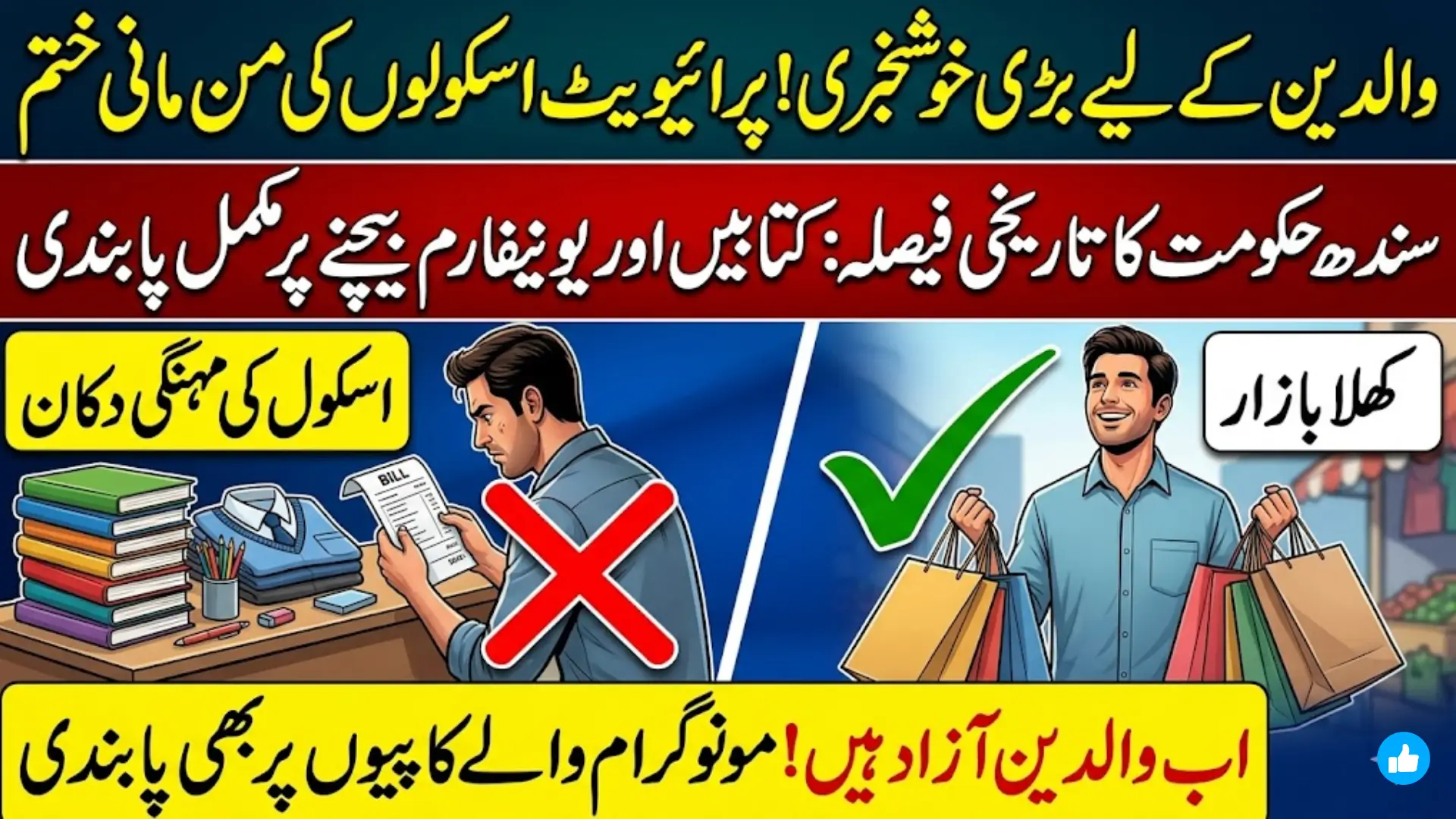
Sindh Private Schools Ban on Selling Books and Uniforms. The Sindh Education and Literacy Department has made a landmark decision that will bring significant financial relief to thousands of families across the province. A complete ban on selling books and uniforms has been officially announced, putting an end to a long-standing practice that was quietly draining the pockets of parents every academic year. This new directive applies to all private schools in Sindh and covers the sale of textbooks, uniforms, copies, and any other stationery items on school premises.
What the New Notification Says
According to the official notification issued by the Sindh Education and Literacy Department, private school administrations are no longer permitted to sell books, notebooks, uniforms, or any other school-related items directly on their premises. This ban is comprehensive and leaves no room for exceptions or workarounds.
The Sindh private schools ban on selling books and uniforms is a direct response to growing complaints from parents who felt trapped in a system where schools controlled what they bought, where they bought it, and how much they paid for it. The new notification makes it legally clear that this practice must stop immediately across all registered private schools in the province.
Ban on Forcing Parents to Buy from Specific Shops
One of the most significant aspects of this directive is the ban on schools forcing parents to purchase items from specific shops or vendors. Many private schools had developed arrangements with particular stationery shops, uniform suppliers, or book vendors, effectively removing parental choice and creating a monopoly that benefited the school or its associates financially.
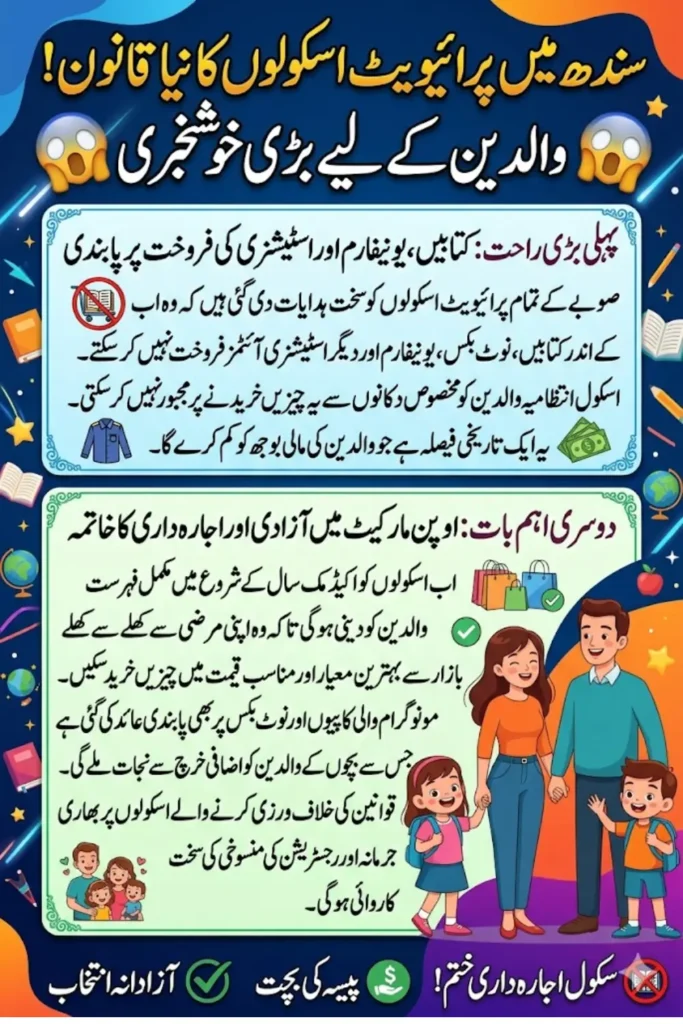
This practice placed an unfair burden on families, especially those with limited incomes, who had no option but to pay whatever price was set by the school-designated supplier. With this ban now in place, parents are free to shop wherever they find the best quality and price, bringing genuine freedom back to household education budgets.
Schools Must Provide Complete Book and Stationery Lists
To support this new policy, the Sindh Education and Literacy Department has directed all private schools to provide a complete list of required books and stationery items at the beginning of each academic year. This list must be shared with parents well in advance so they have enough time to purchase everything from the open market.
This simple but powerful step opens the door to healthy price competition among vendors and shops, which naturally drives prices down and improves quality. Parents will now be able to compare prices, look for discounts, and make informed purchasing decisions rather than being handed a bill by the school with no alternatives.
Monogrammed Notebooks Declared Illegal
The department has gone one step further by specifically declaring it illegal for schools to require parents to purchase notebooks or stationery items that carry a school-specific monogram or logo. This was a clever tactic used by many private schools to ensure that even stationery purchases were funneled through school-controlled channels.
By making monogrammed notebooks illegal, the Sindh Education and Literacy Department has closed a loophole that was costing families extra money every year without any real educational benefit. A plain notebook serves the same academic purpose as one with a school logo — and now parents will not be forced to pay a premium for branding that only benefited the school.
Penalties for Violations — Strict Action Warned
The Directorate of Private Institutions has made it clear that this is not a guideline but a binding directive. Schools that are found violating the Sindh private schools ban on selling books and uniforms will face serious consequences, including heavy financial fines and the possible cancellation of their school registration.
This strong warning is essential to ensure that the policy is not ignored or quietly bypassed. Strict enforcement will be the key factor in determining whether this directive delivers real change on the ground or remains just another announcement on paper.
Public Response — Parents and Civil Society React
The response from parents and civil society has been overwhelmingly positive. Many parents have described the move as long overdue, sharing their frustration over years of being forced to buy overpriced books and uniforms from school-designated sources with no other option available.
Civil society organizations working on education rights have also welcomed the decision, calling it a meaningful step toward making private education more affordable and transparent in Sindh. Advocacy groups have been demanding such regulation for years, and this notification is being seen as a turning point in how private school practices are monitored and controlled.
Conclusion
The Sindh private schools ban on selling books and uniforms is a bold and parent-friendly policy that directly addresses one of the most common financial complaints in Pakistan’s private education sector. By prohibiting on-premises sales, ending forced vendor arrangements, requiring open book lists, and declaring monogrammed stationery illegal, the Sindh Education and Literacy Department has taken a comprehensive approach to reducing the hidden costs of private schooling. With strict penalties in place for violators, the success of this policy now depends on consistent and transparent enforcement. If implemented properly, this directive has the potential to make quality private education significantly more affordable for families across Sindh.
CM IT Internship Program Punjab: Apply Now for Rs 50,000 Monthly Stipend