Kitab Gaari and Science Ki Sawari
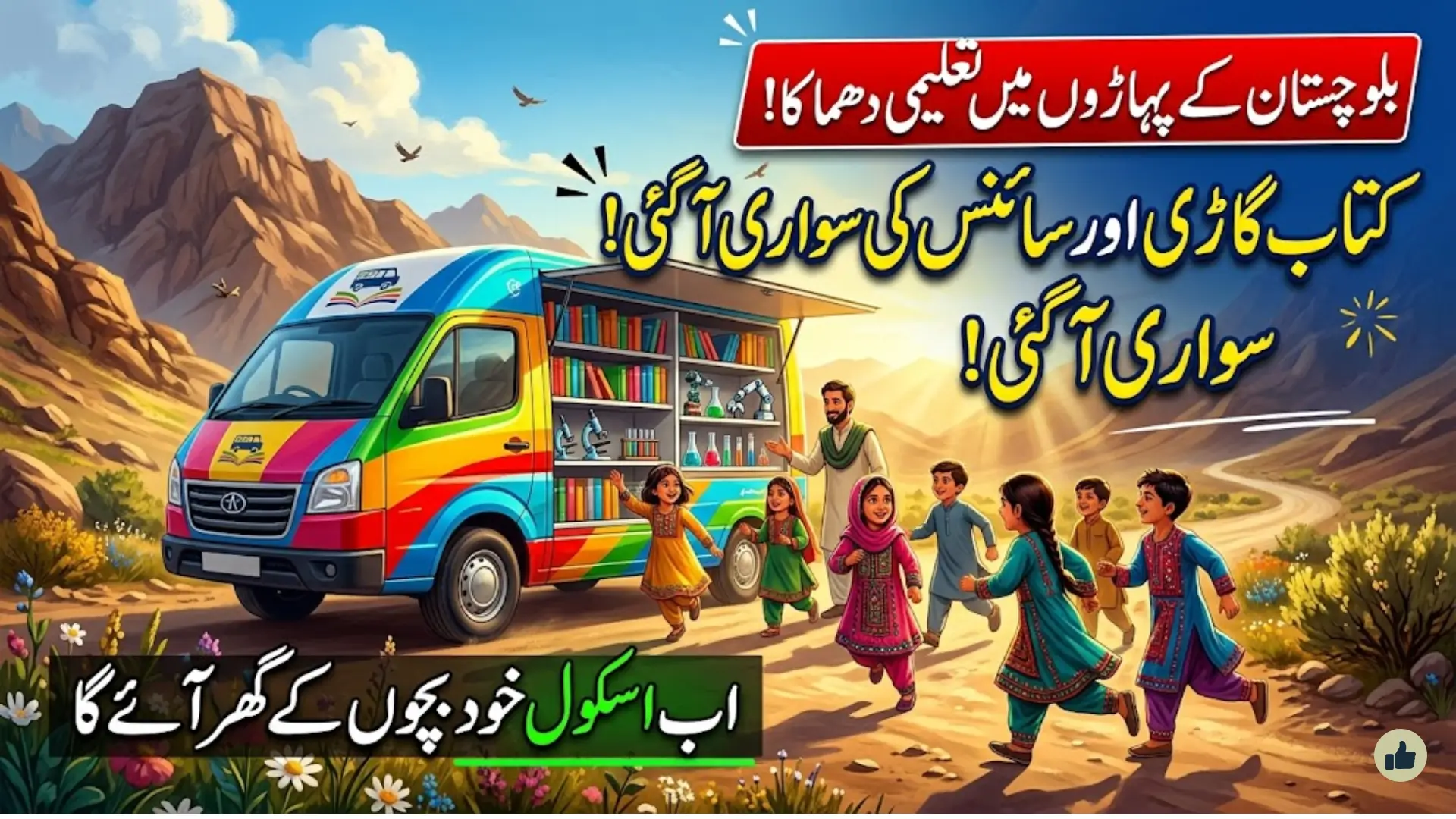
Kitab Gaari and Science Ki Sawari. Balochistan is a province of vast landscapes and scattered communities. For decades, children in its remote villages have missed out on quality education simply because schools were too far away. The Balochistan Government has now taken a creative and courageous step to change this reality by launching Kitab Gaari and Science Ki Sawari — two innovative mobile education initiatives that are literally bringing learning to the doorsteps of underserved communities.
What Are Kitab Gaari and Science Ki Sawari?
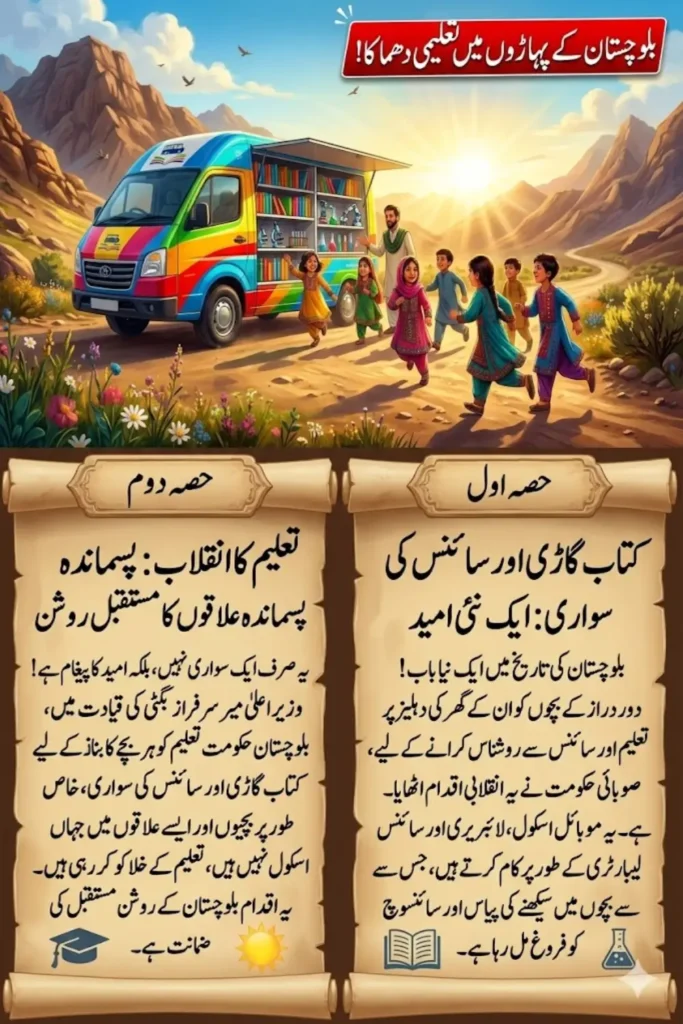
Kitab Gaari, meaning Book Van, and Science Ki Sawari, meaning Science Van, are mobile education units introduced by the Balochistan Government to expand learning opportunities across the province. What started as simple mobile schools has grown into something far more powerful. These vans have evolved into moving libraries, teaching centres, and mobile science laboratories — all in one.
The concept is simple but brilliant. Instead of waiting for children to come to schools, the schools come to the children. This approach is especially effective in a province like Balochistan, where geographical distances and lack of infrastructure have long been barriers to education.
Bridging the Education Gap in Remote Areas
For children living in far-flung villages of Balochistan, quality education was once a distant dream. There were no nearby schools, no trained teachers, and no learning resources available. The Kitab Gaari and Science Ki Sawari Balochistan initiative is directly addressing this long-standing gap.
By reaching communities that were previously left behind, these mobile units are giving thousands of children access to the knowledge and skills they deserve. This is not just about literacy — it is about opening doors to a better future for an entire generation that was at risk of being forgotten by the mainstream education system.
Kitab Gaari — The Book Van Project
The Kitab Gaari project is currently operational in 14 districts across Balochistan. These districts include Zhob, Qila Saifullah, Loralai, Pishin, Chaman, Quetta, Lasbela, Hub, Gwadar, Jaffarabad, Kachhi, Kech, Jhal Magsi, and Noshki. This wide coverage reflects the government’s determination to leave no child behind, regardless of where they live.
As a moving library and teaching centre, the Book Van carries books, learning materials, and trained educators directly into villages. Children who have never set foot in a proper classroom now have access to structured learning in their own communities. The Kitab Gaari is more than a van — it is a symbol of hope on wheels.
Science Ki Sawari — Promoting Scientific Thinking
While the Book Van focuses on general literacy and learning, the Science Ki Sawari takes a more specialized approach. Currently active in Jaffarabad district, this mobile science laboratory is designed to promote scientific curiosity, critical thinking, and hands-on learning among young students.
In many rural areas, science education is either absent or extremely limited. The Science Van changes this by bringing experiments, demonstrations, and interactive science lessons directly to students. When a child sees a science experiment for the first time, something clicks. Curiosity is sparked. Questions begin. And that is exactly where learning truly begins.
Mir Sarfraz Bugti Praises the Initiative
Chief Minister Mir Sarfraz Bugti has warmly praised the Kitab Gaari and Science Ki Sawari Balochistan initiative, calling it a beacon of hope for the province’s education sector. His words carry weight because they reflect the government’s genuine belief in the power of innovative education solutions.
He reaffirmed the government’s commitment to supporting efforts that ensure children across Balochistan gain access to modern knowledge and skills. The Chief Minister emphasized that such creative programmes are not optional extras — they are essential tools for building a smarter and more capable generation.
Strengthening School Enrolment Campaigns
Beyond delivering education, the Kitab Gaari and Science Ki Sawari Balochistan initiative is also playing an important role in strengthening school enrolment campaigns. By visiting remote communities and engaging children in exciting learning activities, the programme is inspiring more families to send their children to school regularly.
When children experience the joy of learning through these mobile units, their desire to continue education grows naturally. This creates a positive cycle — mobile education sparks interest, interest drives enrolment, and enrolment builds a stronger education system for the entire province.
Building a Brighter Future for Balochistan
The long-term vision behind these initiatives goes beyond just delivering lessons. The Kitab Gaari and Science Ki Sawari programme is reshaping how Balochistan thinks about education. It is proving that innovation, determination, and a genuine concern for every child can overcome even the toughest geographical and infrastructural challenges.
As more districts are covered and more children are reached, this mobile education model has the potential to become a blueprint not just for Balochistan but for other underserved regions across Pakistan.
Conclusion
The Kitab Gaari and Science Ki Sawari Balochistan initiative is a powerful reminder that education is a right, not a privilege. By bringing books, teachers, and science experiments directly to remote villages, the Balochistan Government is giving thousands of children a chance they never had before. With strong leadership, growing community support, and a clear vision for the future, these mobile education vans are not just travelling across districts — they are driving Balochistan toward a brighter, more educated, and more hopeful tomorrow.
Electric Cart Service at Pakistan Airports Launching Soon for Passenger Convenience